Direct answer
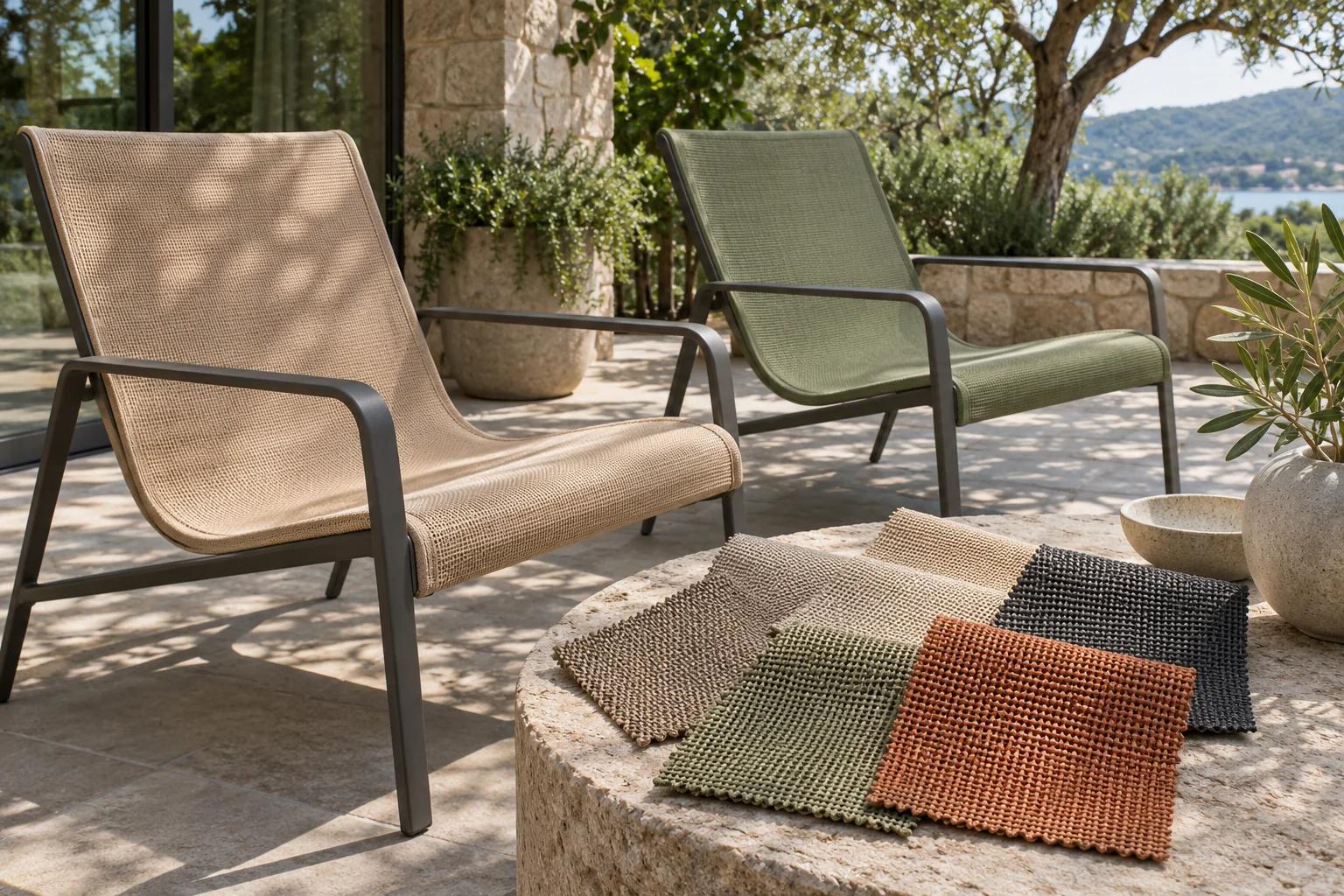
For commercial seating teams planning a 2027 collection, useful outdoor furniture fabric directions include warm neutral foundations, botanical greens, mineral-inspired light tones, richer earth accents and more visible woven texture. Use them to shortlist combinations of mesh, chair frame and surrounding materials. Then request identified physical samples and review the combination on a representative chair before approving a production reference.
These are design directions for development, not a universal ranking of best-selling colors. A trend forecast cannot establish fabric availability, sling suitability or outdoor performance. The practical question is: which color-and-construction combinations should your team sample, compare and approve for the actual furniture program?
What is informing the 2027 design direction?
Sherwin-Williams' 2027 Colormix forecast, Rewild, presents 48 colors, including ten continuity colors, designed to work in different combinations. It provides a useful starting point for coordinating architecture, frames and textiles. It is a paint and design forecast; a color reference still needs to be translated into the chosen mesh construction.
Casual News Now's November 12 coverage connects the forecast with lighter neutrals, muted blues and greens, and deeper reds, browns and grays. For outdoor seating development, these suggest several palette families to investigate rather than one color every collection should adopt.
The textile-specific reference is Phifer's 2026–27 outdoor fabric collection overview. It describes warmer neutrals, earth tones, light mineral shades, botanical greens and controlled accents, alongside a collection intended for commercial outdoor settings. The page does not display a clear publication date, so it is used here as collection context rather than a dated news announcement. Its specifications and performance claims apply to its own products.
The sample recommendations below are our interpretation of those design references for a commercial seating brief. For the broader material overview, see our 2026 outdoor furniture fabric trends guide.
Which colors and textures should commercial seating teams test?
Build a small comparison set around the setting, furniture design and existing collection. Test one candidate combination at a time so reviewers can identify why they prefer it.
| Direction to explore | Possible role in a seating collection | What the sample review should resolve |
|---|---|---|
| Warm neutrals: sand, warm gray and stone | A foundation for terrace chairs, loungers or dining sets | Does the undertone coordinate with the actual frame finish, tabletop and paving? |
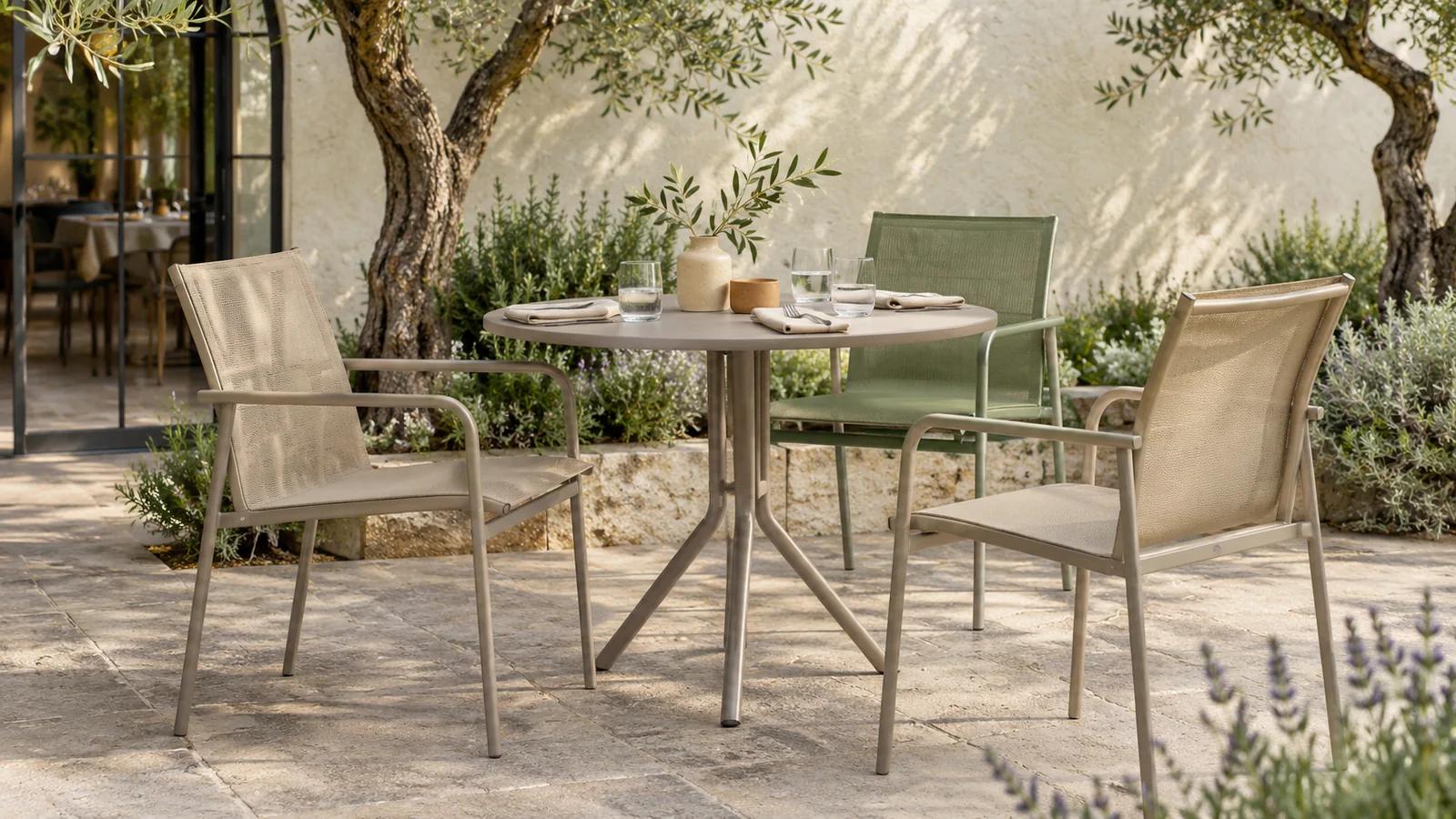
| Botanical greens: muted leaf, olive or sage directions | A connection between seating and planting | Does the mesh remain distinct from surrounding vegetation, and does the combination suit the buyer's design brief? |
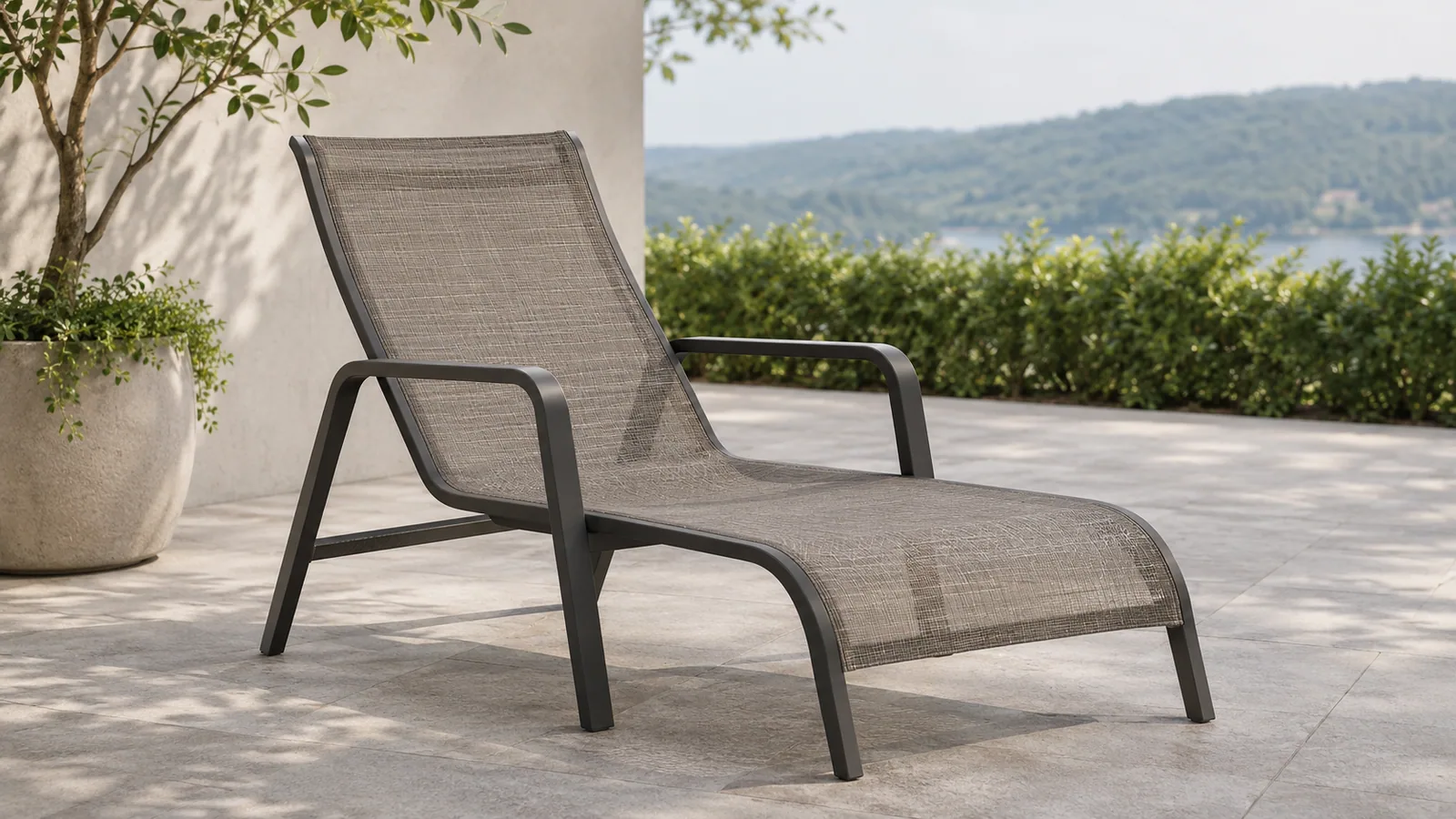
| Light mineral shades and muted blue directions | A lighter alternative for contemporary hospitality spaces | How does the open mesh read against a pale wall, dark chair frame and shaded background? |
| Clay, brown and deeper earth accents | An accent chair, a selected seating zone or a contrasting panel | Is the intended color relationship a deliberate contrast, a tonal combination or a close match? |
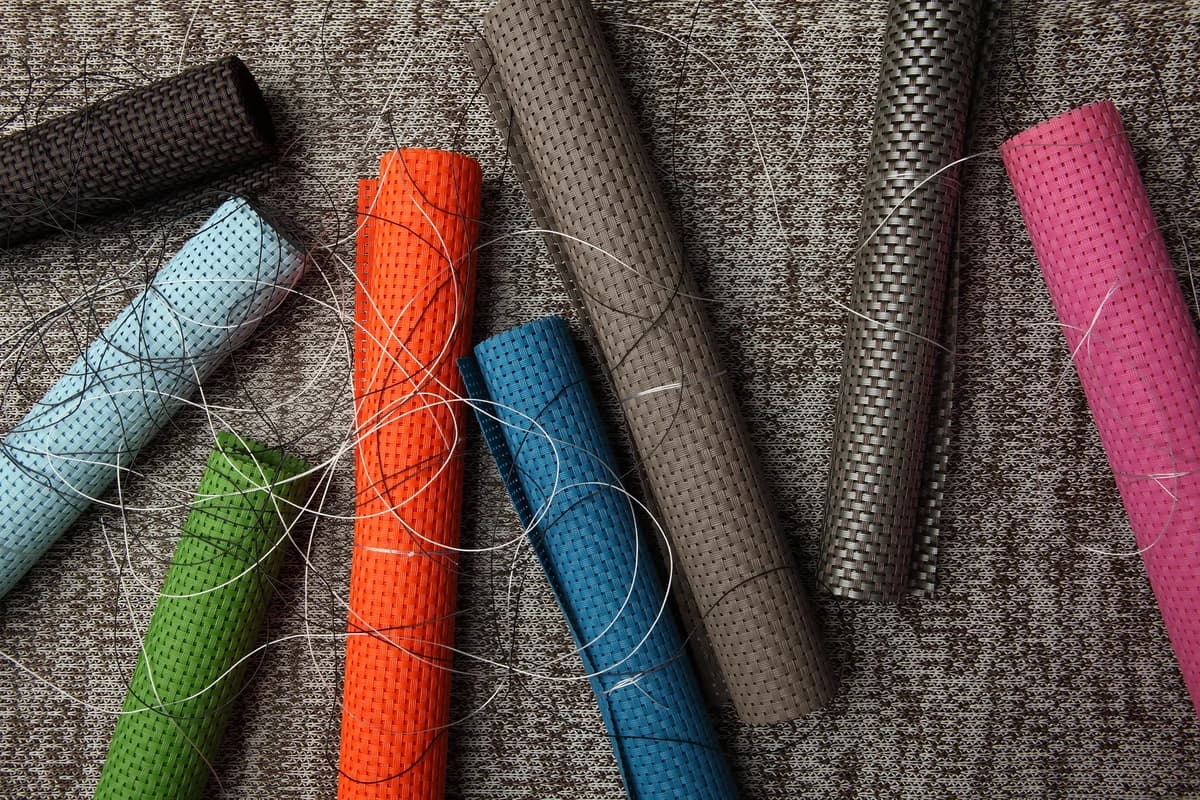
| Tonal yarn variation and visible woven structure | Texture without a large decorative motif | Does the texture remain appropriate at full-chair scale and after installation under tension? |
These are proposed sample directions, not a list of AOLEADER stock colors. Request current references before finalizing a palette or promising a customer that a particular shade can be supplied.
Texture also needs a precise description. Instead of asking only for a more natural or premium look, explain whether you mean a fine open mesh, a more visible weave, a subtle two-tone effect or a less glossy surface. Ask the supplier which actual constructions can be considered. A textured appearance alone says nothing about strength, abrasion resistance, cleaning compatibility or color retention.
From a trend board to a real mesh sample
Compare the mesh structure and the intended panel role
Identify whether the fabric will form a tensioned sling seat, a back panel, a decorative insert or a cushion cover. These roles require different evaluations. Start with a drawing, frame or existing panel and the intended attachment method.
For open mesh, review the pattern at swatch distance and across a complete chair. Record the fabric face and direction, and compare samples over the same backing. Where yarn arrangement or openness changes, treat the result as a separate construction to evaluate. A near-identical color does not make two materials interchangeable.
Use Outdoor Furniture Fabric to shortlist material references, then review the finished use through our outdoor furniture application guide. If fabric weight is part of the specification, our mesh GSM guide explains why weight belongs alongside the other selection criteria.
Review color in daylight, shade and the intended evening setting
A mesh panel may look different when held against a white sample card, installed over a dark frame or viewed with planting behind it. Photograph these settings for discussion, while retaining the physical sample as the approval reference.
Use agreed, repeatable viewing conditions for the actual color approval. Add an application review in the expected setting—such as a shaded dining terrace or an area used after sunset—to assess the complete design. The outdoor visit helps the team judge appearance; the controlled comparison provides a consistent basis for supplier communication.
Initial color approval and colorfastness after exposure are separate decisions. If the program requires evidence of color retention, specify the relevant method, conditions and acceptance criteria for the exact material and color. Our outdoor sling fabric UV testing guide explains the report questions to resolve.
Pair the mesh with the actual chair frame and nearby materials
Ask reviewers to compare a complete combination: mesh, frame finish, tabletop or adjacent material, and setting. A warm-gray mesh may coordinate with one bronze-colored finish and look unintentional beside another. Define the intended relationship before asking for a revision.
For a coordinated seating-and-shade scheme, compare separate physical references from Shade Screen Fabric. State which component is seating and which is an exterior screen. A shared color direction does not establish the same structure, performance or suitability for both applications.
Before choosing a contract outdoor furniture fabric, review a representative assembled chair with the furniture manufacturer or responsible technical team. Record fit, panel orientation, attachment, surface feel and appearance under the intended tension. Keep the required furniture and material tests in the technical brief rather than assuming the visual trial proves performance.
How should color, construction and batches be recorded at approval?
Make it possible for purchasing, production and the supplier to identify the same approved item. A compact approval record can include:
| Approval field | Information to retain |
|---|---|
| Collection and application | Collection revision, chair model, panel role, frame drawing and intended use. |
| Material identity | Supplier reference, construction, face, direction and finish; mark any unconfirmed detail. |
| Color reference | Physical sample ID, color code if used, date and the reference that takes priority. |
| Coordinating components | Actual frame finish and other material references; specify match, coordination or contrast. |
| Review conditions | Backing, viewing conditions, reviewers and any agreed measurement procedure. |
| Prototype decision | Chair or prototype ID, observations, changes requested and approval scope. |
| Production traceability | Batch and roll identifiers, retained sample, agreed inspection approach and reorder reference. |
| Change control | Who approves a change to color, yarn, coating, weave, finish or another specified feature. |
If a candidate changes construction during development, give it a new revision and review the affected features again. Preserve the superseded sample as clearly marked history. For a reorder intended to sit beside earlier furniture, tell the supplier that continuity with the retained reference matters and agree how the new batch will be assessed.
For detailed guidance on lighting, sample presentation and color-difference tolerances, use our color matching and sample approval guide. This article's role is to help select the combinations worth developing for 2027.
A 2027 collection-development checklist
Send a hospitality mesh fabric sample brief that answers these questions:
- Where will it be used? State the furniture type, site setting, destination market, expected use and cleaning context.
- Which combinations should be compared? Identify a base color, an alternative or accent, the desired texture and the actual frame finish.
- What is fixed? Attach the frame or drawing, panel dimensions and attachment method; identify construction requirements already approved.
- What remains open? Ask for current color references, candidate constructions, sample formats and any custom-development options to be confirmed.
- How will approval work? Name the physical reference, review conditions, prototype stage, decision maker and required documentation.
- What supply assumptions need confirmation? Give estimated quantity by color, target milestones and destination. Request confirmation of feasibility, sampling schedule, minimum quantities and any development charges.
The next step is a focused physical sample set and an approval record that the whole buying team can use. [Discuss Colors and Samples for Your Next Collection](/contact) with AOLEADER. Share the frame, palette direction and quantity by color; ask the team to confirm current color cards, construction options, sample availability and development conditions for your request.
FAQ
What are the key outdoor furniture fabric color directions for 2027?
The cited forecasts and collections suggest warm neutrals, botanical greens, light mineral tones, muted blues and deeper earth accents as directions to explore. They are design references rather than a global sales ranking or a statement of supplier availability.
Are trend colors suitable for every outdoor environment?
No. Evaluate the actual color and construction against the setting, neighboring materials, cleaning plan and required performance evidence. A palette that suits a landscaped terrace may need a different treatment in another seating environment.
Does a paint color code guarantee a matching mesh sample?
No. Use it to communicate a target, then approve the appearance on the chosen physical fabric. Mesh structure, surface and backing can affect the comparison with paint or metal.
Which texture should we request for contract seating?
Describe the intended appearance and panel role, then compare identified constructions. Review the surface, visual scale and conversion on the intended furniture. Request relevant performance evidence separately before approval.
Can seating mesh and shade screens use a coordinated palette?
They can be developed toward a shared visual direction, subject to available references. Approve each material for its own use and compare the actual samples together; do not assume identical appearance or suitability from a color name.
What should a buyer confirm before requesting a custom 2027 color?
Confirm whether the selected construction can be developed in that direction, which physical reference will be used, available sample formats, quantities by color, development charges if any, and a realistic approval schedule. These details require confirmation for the specific request.