Direct answer
An outdoor sling fabric report is useful only when it identifies the material and colorway, the exact exposure method and conditions, the exposure endpoint, and the property measured afterward. AATCC TM16.1 examines textile colorfastness in outdoor daylight under glass; AATCC TM16.3 uses a xenon-arc lamp to evaluate colorfastness to light. ASTM G154 describes operation of a fluorescent UV exposure apparatus, but does not by itself set a universal fabric cycle or pass/fail limit. Compare gray-scale color-change grades or strength retention only after matching the exposure and evaluation methods. “Passed 1,000 hours” alone is not a comparable specification or a prediction of years outdoors. AATCC TM16.1, AATCC TM16.3, ASTM G154
Why this matters for a sling chair
Sun-exposed patio chairs need a color and surface that buyers will accept after use. Sling seating also depends on a fabric panel held under tension. A report that shows limited fading does not establish that the same fabric retains the fit or strength required by a particular chair frame. Fabric construction, coating, shade, orientation, edge design and cleaning conditions all affect the finished product.
Use this guide to turn a vague request for “UV-resistant fabric” into a reportable test brief. For material selection before testing, see our PVC-coated polyester mesh guide for sling chairs and outdoor furniture fabric references. Product-specific AOLEADER test results and acceptance limits must be confirmed against the actual material reference; none are claimed here.
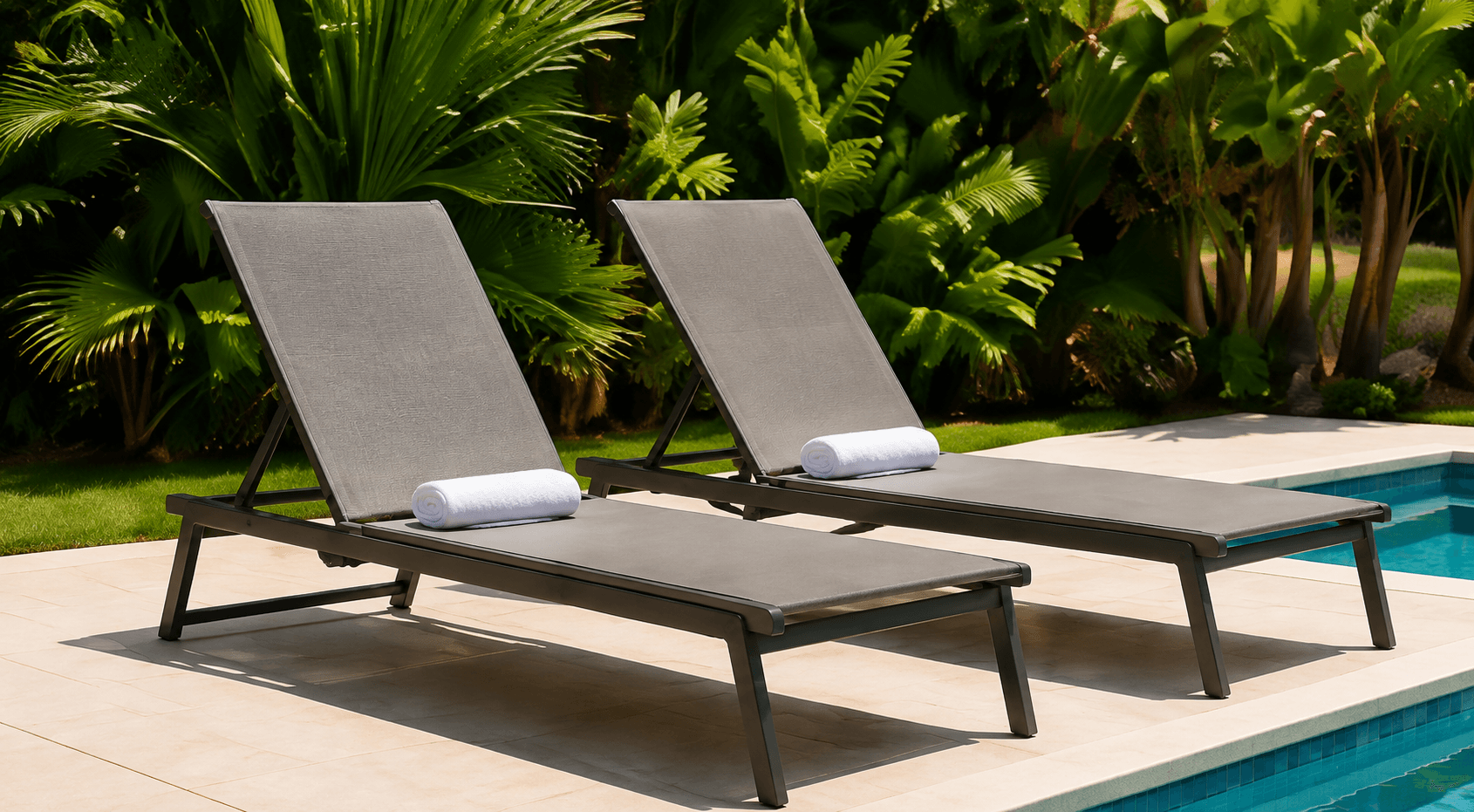
Image note: The hero scene is AI-generated to illustrate outdoor light exposure. It does not show AOLEADER's facility, a tested SKU or a laboratory result.
UV resistance, lightfastness and weathering answer different questions
UV resistance is a broad purchasing phrase. It may refer to color, coating appearance, or retained physical properties after exposure. It is not a result until a test method, endpoint and measured property are named.
Lightfastness focuses on change in color after exposure to light. AATCC defines colorfastness to light in terms of resistance to a change in color characteristics under sunlight or an artificial light source. A color result says little about tensile retention unless a separate physical test is performed. AATCC terminology
Weathering addresses a wider exposure problem: light together with variables such as moisture and heat, followed by evaluation of the changes that matter to the application. It can include color, cracking, stiffness or mechanical properties, depending on the agreed protocol and evaluation. AATCC's weather-resistance methods and ASTM's apparatus practices should not be treated as interchangeable colorfastness scores. AATCC method directory, ASTM G154
For an outdoor furniture program, write down both questions: *What color change is acceptable?* and *What condition must the load-bearing fabric retain?* A finished chair may need additional assembly-level checks beyond a fabric test.
What AATCC TM16.1, TM16.3 and ASTM G154 actually cover
| Reference | Exposure or method focus | What to request from the laboratory | What it does not prove alone |
|---|---|---|---|
| AATCC TM16.1 | Textile colorfastness to natural outdoor light under glass | Exposure location and period, specified endpoint, specimen and control details, and color evaluation | Direct rain-and-sun durability of an uncovered chair |
| AATCC TM16.3 | Textile colorfastness to xenon-arc light, with method options for alternating or continuous light | Standard edition, selected option, exposure endpoint, apparatus conditions and color evaluation | A fixed number of years in a specific climate |
| ASTM G154 | Operating practice for fluorescent UV lamp exposure with controlled environmental conditions, often including moisture | Lamp and irradiance settings, temperatures, light/moisture cycle, total exposure, controls and the separate method used to evaluate the fabric afterward | A stand-alone pass/fail grade or a complete simulation of all outdoor hazards |
AATCC's directory separately lists TM16.2 for carbon-arc light. Do not substitute a carbon-arc, xenon-arc or fluorescent-UV result for another without an agreed correlation. TM16.1 is also not the same as fully exposed outdoor weathering: its published scope specifies outdoor exposure under glass. AATCC TM16.1
The published summary of AATCC TM16.3 says its options do not, by themselves, imply an accelerated test for a specific use. ASTM G154 likewise calls for the operating conditions to accompany any reported result; the practice alone does not choose the best cycle for every material.
Why “more test hours” is not a fair comparison
Two reports can both say “500 hours” yet use different lamps, irradiance, filters, temperatures, wet/dry cycles, specimen positions or color measurements. They have not applied the same exposure. AATCC explains that, for its lightfastness framework, exposure should be expressed in AATCC Fading Units (AFU) rather than treating hours or days as equivalent doses. Twenty AFU is not twenty hours. AATCC Blue Wool lightfastness explanation
ASTM G154 reports may appropriately include elapsed hours, but those hours remain inseparable from the stated lamp and operating cycle. The practice recommends comparison controls and cautions against comparing different devices without established reproducibility or correlation. A longer run on a different setup is not automatically the stronger result. ASTM G154
Ask for the *exposure definition and measured outcome*, not a headline duration. If a supplier quotes a service-life claim, request the field evidence and assumptions supporting it; a laboratory exposure by itself cannot convert directly into a universal number of outdoor years.
Read the result: gray scale, color difference and strength retention
Gray-scale color change
AATCC EP1 evaluates color change, which is different from the gray scale for staining. Its scale runs from grade 5, indicating essentially no change, toward grade 1, indicating a large change, with half-step grades available. A grade such as 4 is meaningful only alongside the tested colorway, exposure endpoint and assessment procedure. It does not certify every shade in the collection. AATCC gray-scale information
Ask whether the reported grade is a visual EP1 assessment or an instrument-based color result. If the laboratory reports an instrumental color difference, keep the measurement and evaluation conditions with the value. Do not equate a gray-scale grade with a color-difference number without a stated method of comparison.
Physical-property retention
For a load-bearing sling panel, compare the unexposed and exposed specimens using the same agreed tensile method, specimen direction, conditioning and units. An illustrative calculation is:
Strength retention (%) = exposed breaking force ÷ unexposed breaking force × 100
For example, 800 N after exposure divided by 1,000 N before exposure equals 80% retention. These numbers are an arithmetic example, not an AOLEADER test result or a suggested pass limit. The buyer and supplier must agree on an appropriate fabric method and acceptance threshold. ASTM D5034 is one possible grab-test method for many textile fabrics, where applicable; a grab result is not interchangeable with a strip-test or finished-chair result. ASTM D5034
Visual and functional observations
Record coating cracks, chalking, stiffness, delamination, edge fray or a change in hand when these matter to the selected construction. Ask the lab to photograph the exposed and control specimens under consistent conditions. A color grade alone will not capture these changes.
How to compare reports from different laboratories
Use one comparison sheet. Mark a field “not comparable” when either report omits it; do not fill gaps by inference.
| Field to match | Why a mismatch matters |
|---|---|
| Fabric construction, model, colorway and production lot | Different coatings and pigments can respond differently |
| Standard designation, edition and selected option | A method name alone may cover several setups |
| Lamp or outdoor exposure setup, filters and irradiance | Changes the light delivered to the specimen |
| Temperature, humidity, wet/dry or condensation cycle | Changes the combined exposure |
| Exposure endpoint or dose; hours where relevant | Duration without conditions is incomplete |
| Control specimen and number of replicates | Shows how variation and apparatus behavior were handled |
| Color-evaluation procedure and viewing conditions | Affects the reported appearance result |
| Tensile method, test direction and pre/post conditioning | Needed to interpret strength retention |
| Laboratory identity, report number and specimen traceability | Connects the result to a particular material sample |
If two reports differ, send both protocols to the laboratories and request a matched retest of the *same retained material reference*. This is more reliable than ranking reports by their largest hour count. ASTM G154 specifically recommends simultaneously exposed controls for comparison. ASTM G154
What to write into a North American furniture purchase specification
The following is a drafting checklist, not a universal industry threshold. Fill the blanks with the buyer's product team, fabricator and testing laboratory before issuing the purchase order.
- Material identity: construction or model, coating, width, colorways, lot traceability and retained approval sample.
- End use: chair or lounger type, residential or contract duty, frame attachment, tension direction, destination market and expected exposure.
- Colorfastness route: select AATCC TM16.3 and its specific option and agreed AFU endpoint, or another method justified by the intended use. If specifying TM16.1, state that the exposure is outdoor daylight under glass.
- Weathering route: if using ASTM G154, name the accompanying exposure cycle, lamp type, irradiance, temperatures, moisture phase and total duration; state which property-evaluation methods follow exposure.
- Acceptance criteria: agreed minimum color-change grade or instrumental limit for each tested colorway; an agreed physical-property retention requirement where applicable. Enter actual numbers only after buyer approval.
- Sampling and reporting: specimen orientation, number of specimens, control, test lab, report format, photos and rules for retesting after material or color changes.
- Finished-chair review: separately approve sling fit, seams or welds, edge retention and assembled seating performance. A fabric report cannot replace this review.
For the broader climate brief, see outdoor sling mesh for North American climates. For a sourcing brief that includes documentation and landed-cost questions, use our North American fabric sourcing checklist.
Discuss your UV and colorfastness requirements
Send the finished product, frame or panel drawing, preferred fabric reference, colorways, destination market and the buyer's existing test protocol if one exists. AOLEADER can discuss which material samples and product-specific documentation may be available and which testing conditions still need to be defined. We will not infer a pass result from an unrelated sample or a generic UV claim.
Next step: Discuss Your UV and Colorfastness Requirements.
FAQ
Is AATCC TM16.3 the same as ASTM G154?
No. TM16.3 is a textile colorfastness-to-light method using xenon-arc exposure. G154 is an operating practice for fluorescent UV exposure equipment; it needs a specified cycle and a separate way to evaluate property changes. AATCC TM16.3, ASTM G154
Does 1,000 hours of UV exposure mean several years outdoors?
No universal conversion follows from that number. Ask for the exposure setup, tested property, target climate and field correlation before drawing a service-life conclusion. AATCC exposure explanation, ASTM G154
Can I approve every color from one lightfastness report?
Do not assume so. The report identifies the particular specimens tested. Agree which representative or critical colorways need testing and how a later color or coating change triggers review.
Does a good color grade prove the chair is safe?
No. Color change, retained fabric properties and the performance of the assembled sling chair are different questions. Review the applicable fabric measurements and finished-product construction separately.
Primary technical references
- AATCC standard test method directory
- AATCC TM16.1 scope summary
- AATCC TM16.3 scope summary
- AATCC explanation of Blue Wool standards and AFU
- AATCC Gray Scale for Color Change
- ASTM G154 scope and significance
- ASTM D5034 scope and significance
*Editorial boundary: this guide explains how to specify and interpret testing. It does not assert that AOLEADER's fabrics have passed any named UV, weathering, colorfastness or strength threshold. Confirm any sample-specific claim against its complete laboratory report before publication or sale.*