Direct answer
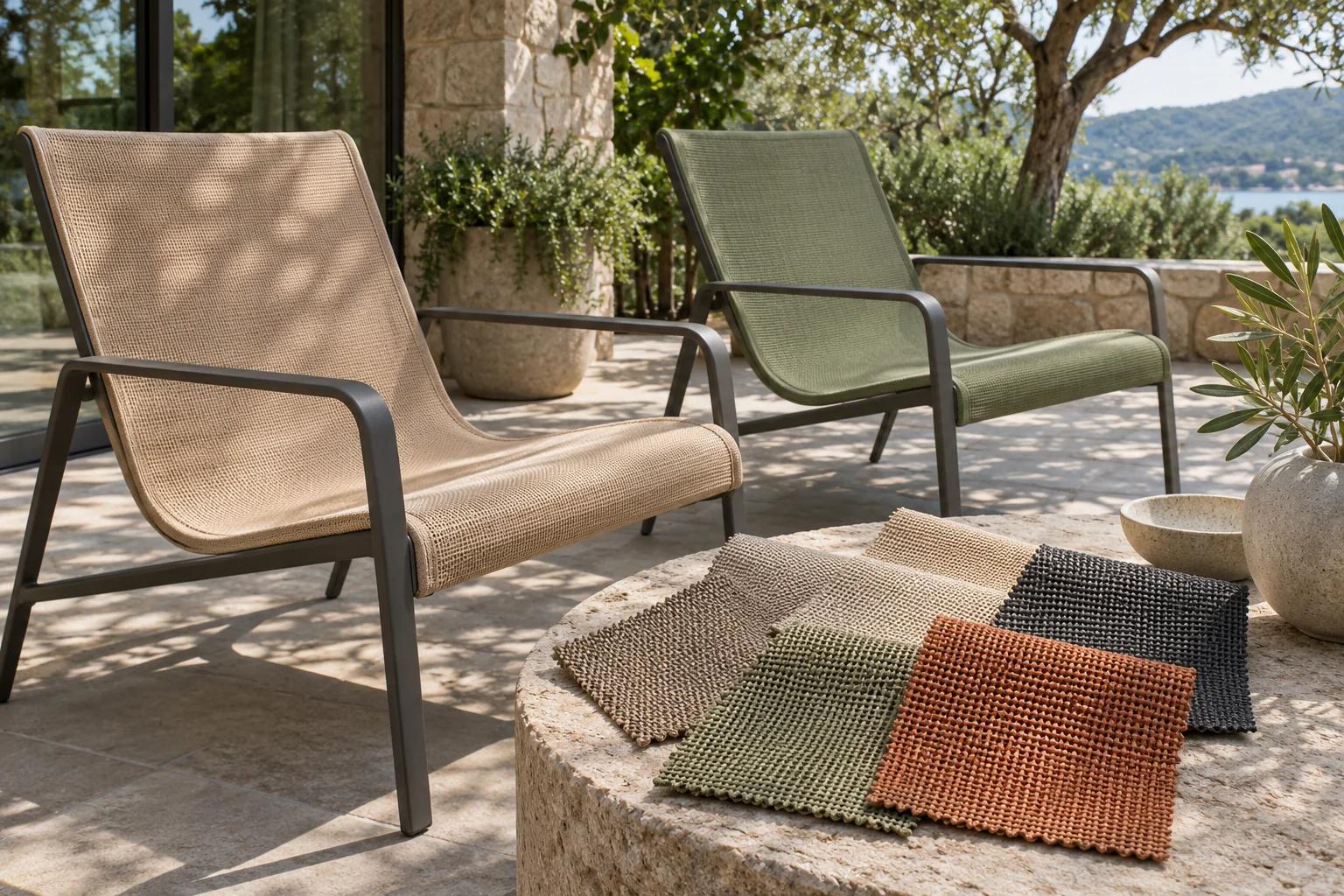
Warm neutrals, nature-inspired color, tactile surfaces and more comfortable outdoor seating are prominent directions in 2026 collections. Translate these ideas into a brief covering the furniture application, frame, comfort priorities, color approval and product-specific evidence.
Outdoor furniture fabric is doing more design work in 2026. It helps establish a collection’s color story, influences how a chair feels, and affects how furniture is maintained in real outdoor settings. For B2B brands, the opportunity is to turn an appealing visual direction into a material specification that manufacturers can sample, approve and reproduce.
This guide looks at color, texture, comfort and material choices for outdoor furniture brands, furniture manufacturers, importers and hospitality buyers. The examples are design directions drawn from industry sources, not a claim that one palette or construction fits every market.
What are the main outdoor furniture fabric trends in 2026?
For sourcing teams, these ideas become useful when paired with a defined furniture application, physical samples, product-specific test evidence and an agreed color approval process.
Sunbrella’s June 2026 *On The Road* collection illustrates one approach: it combines sand and stone tones with botanical greens, coastal blues and sunbaked reds, using solids, texture and pattern across indoor and outdoor fabrics. This is one supplier’s collection, not a forecast of every buyer’s preferences. Sunbrella collection announcement
1. Warm neutrals give collections a flexible foundation
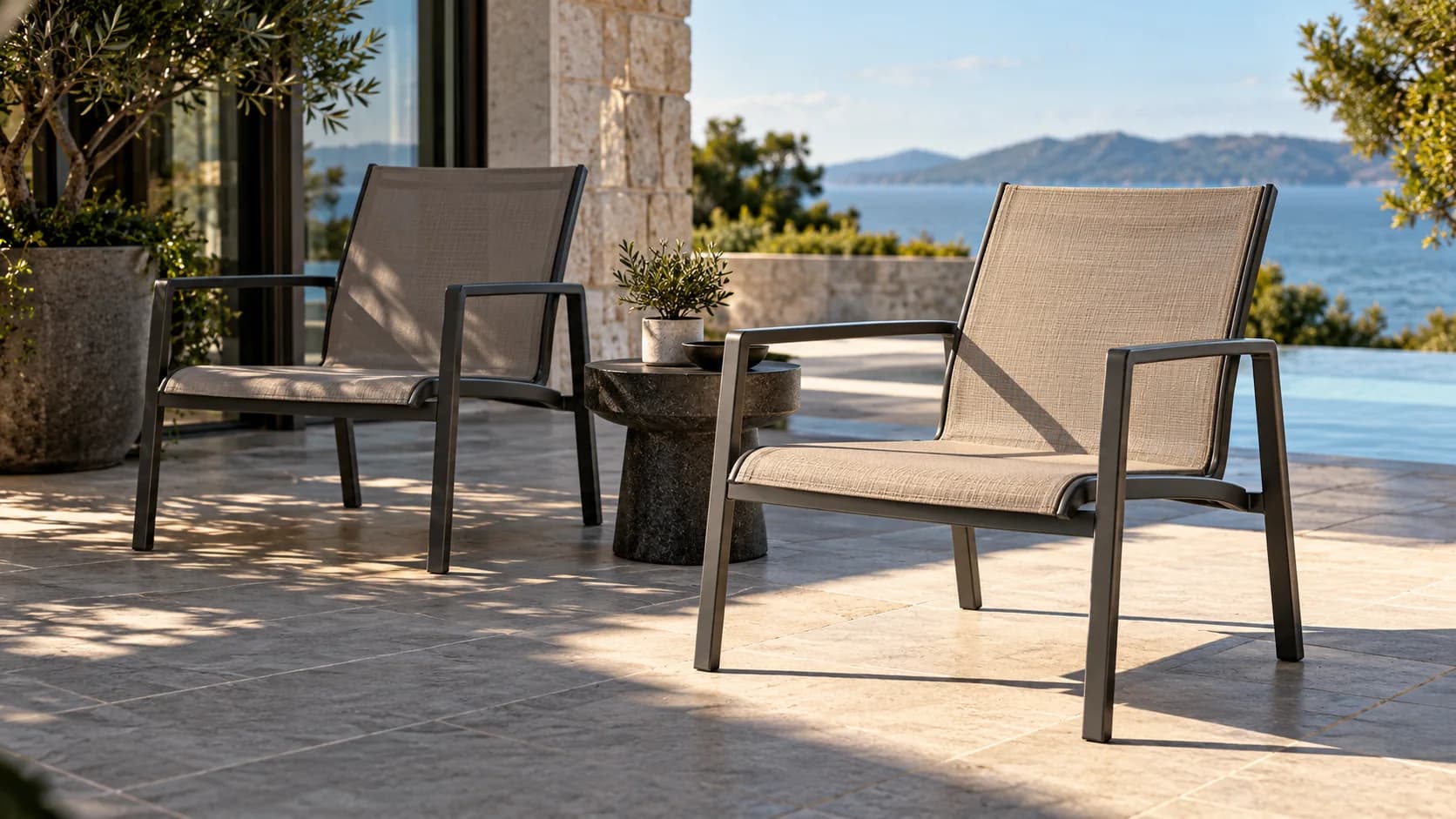
Sand, warm beige, taupe, stone and soft off-white can help furniture sit comfortably alongside wood-look frames, powder-coated metal and natural stone. A neutral sling or cushion also gives brands room to introduce seasonal color through accessories or frame finishes.
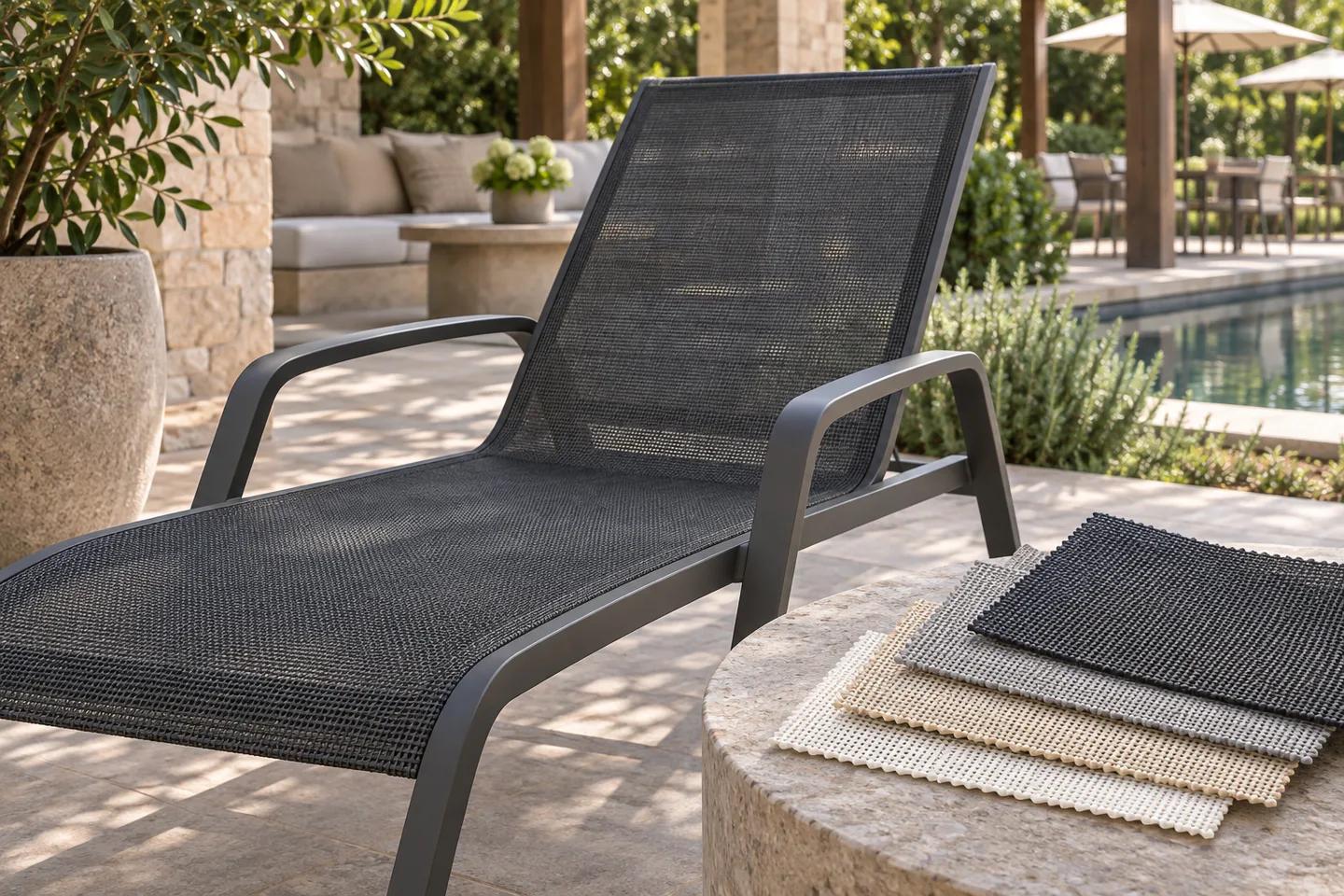
For a buying team, “beige” is only the start of a specification. Compare undertones, weave and surface texture alongside the intended frame finish. A color that looks warm against black metal may appear cooler beside a light wood-look frame.
Buyer action: Request a physical color reference for the exact fabric construction, then evaluate it outdoors and under the lighting used for the buyer’s approval process. Agree the reference sample and acceptable variation before bulk production.
2. Greens, clay and blue add identity without overwhelming a range
Sage and muted green can connect a collection with planting, while terracotta and clay bring warmth. Deep blue and charcoal offer darker alternatives for marine-inspired or contemporary ranges. British Garden Centres’ 2026 UK outlook identifies soft greens, sage and sandy neutrals alongside terracotta, grey and charcoal. Market preferences vary by region and customer, so use this as a shortlist rather than a universal ranking. British Garden Centres’ 2026 outlook
A practical range can combine one or two core colors with an accent color for a specific collection. Ask suppliers to confirm available references, minimum quantities and whether a proposed color can be repeated across the required construction and width.
3. Texture brings an indoor feel outdoors
Outdoor spaces increasingly borrow the softer, more considered appearance of interior rooms. Texture is one way to achieve that effect without relying only on pattern. Fine mesh, tonal yarn combinations, visible woven structure and cushion fabrics with a softer hand can each create a different impression.
LIFE Outdoor Living’s 2026 collection, for example, presents sand and taupe bouclé-look cushions as part of a softer outdoor aesthetic. Sunbrella’s 2026 collection also highlights dimensional weaves and linen-inspired textures. These are examples from their respective ranges; their construction and performance should not be transferred to other fabrics. LIFE Outdoor Living; Sunbrella
Buyer action: Compare texture at both swatch and furniture scale. Ask how the weave will look across a full seat, how its surface feels against skin, and whether the construction suits the planned sewing or edge finish.
4. Comfort depends on the whole chair, not just the fabric name
The same fabric can feel different on two frames. Seat angle, panel tension, support, edge construction and the way a user sits all affect the result. For a sling chair or sun lounger, fabric selection should therefore happen alongside frame development.
A woven mesh may be considered when the design calls for an open structure and a tensioned seat or back. Cushioned upholstery may suit a different furniture concept where softness and a more substantial profile are priorities. Neither category is automatically the best choice for every project.
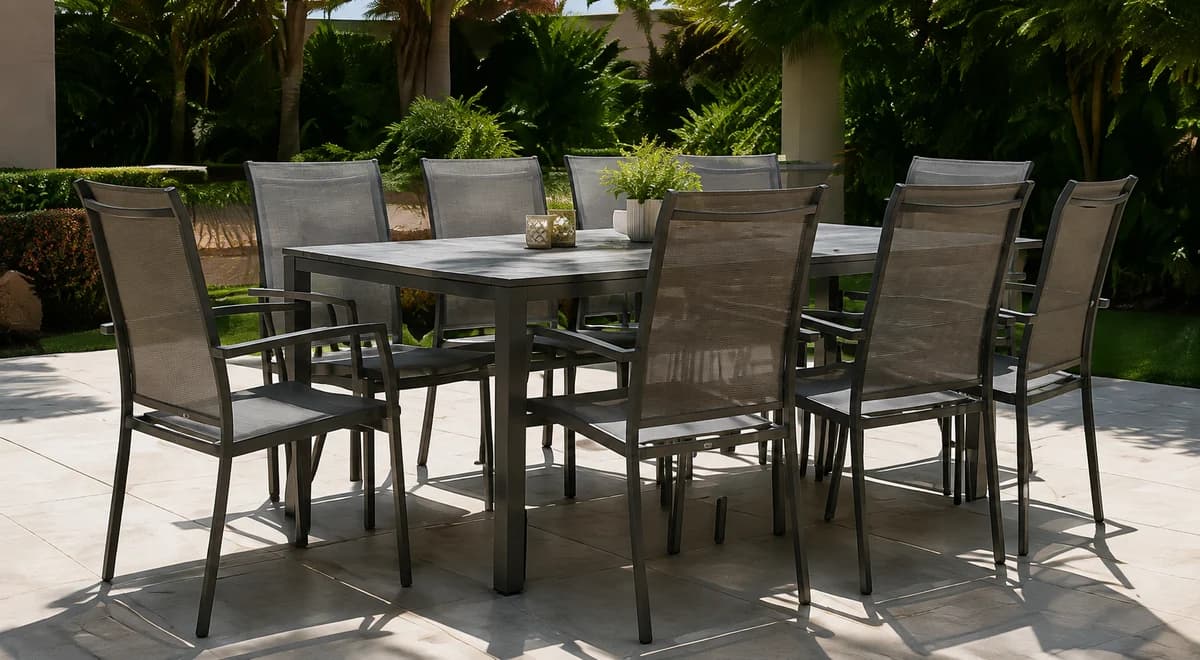
Before approval, place a representative sample on the intended frame. Review sitting comfort, surface feel, attachment method and appearance under tension. Explore outdoor furniture applications and our Textilene fabric buyer’s guide for questions to use in the review.
5. Choose materials by furniture application
A trend board does not define a purchasing specification. Start with the part the fabric will play in the finished furniture and ask the supplier to identify the exact construction.
| Material direction | Typical design role | Questions to ask |
|---|---|---|
| Woven outdoor mesh | Sling seats, backs and loungers | What is the yarn and coating? How does the sample behave under frame tension? |
| Outdoor upholstery fabric | Cushion covers and upholstered seating | What is the fiber and weave? How will covers, filling and drying be managed? |
| PVC- or vinyl-coated polyester mesh | A candidate for some sling and open-weave applications | What is the exact construction, appearance and suitability for this design? |
| Decorative fabric accents | Cushions or coordinated collection details | Does the texture and color coordinate with the frame and primary fabric? |
Names such as *outdoor*, *performance* or *weather resistant* are useful starting points, but they do not establish a specific test result. Also, Textilene® is a trademarked brand name: confirm whether a proposed product is branded Textilene® or another material before using the name in a purchase specification.
AOLEADER’s outdoor furniture fabric and PVC woven mesh categories provide starting points for reviewing visual references. Ask for the exact product details, available colors and supporting documentation for the item under consideration.
6. Turn performance and sustainability goals into evidence
Appearance can win attention, but B2B buyers also need a clear approval process. For every proposed fabric, identify the intended exposure, use, cleaning routine and required evidence before comparing quotations.
Ask which tests apply to the exact product and color, which methods and conditions were used, and what result or acceptance criteria matter to the project. For sunlight and color retention, compare reports under consistent test conditions rather than treating a single number as a universal lifetime claim. Our outdoor sling fabric UV testing guide explains how to structure that discussion.
For recycled content or other environmental claims, ask for the scope of the claim, the relevant material or component, and supporting documentation. A trend toward more responsible purchasing does not prove that a particular fabric contains recycled material or meets a specific standard.
A practical 2026 sourcing checklist for B2B buyers
Use the following brief when discussing a new outdoor furniture collection:
- Product and market: Define the chair, lounger or cushion, target customer, destination market and expected use.
- Visual direction: Share the frame finish, desired color palette, pattern, texture and reference images.
- Material role: Identify whether the fabric is a tensioned sling, back panel, cushion cover or decorative accent.
- Construction: Ask for the exact product reference, fiber, yarn or coating, weave, usable width and available roll details.
- Sample evaluation: Approve the color and texture on a physical sample, then review a representative sample on the intended furniture frame.
- Performance evidence: Specify the tests, methods, results and acceptance criteria relevant to the project; check that documentation matches the proposed material.
- Production and supply: Confirm expected quantities, color approval, packing, lead-time assumptions and any open questions in the quotation.
Build a collection around a clear material brief
The strongest trend-led ranges connect a recognizable color story with a fabric that suits the chair, the customer and the intended environment. For a furniture brand, the next step is to make that connection visible in a sample request: include the design, frame, color direction, target market, quantity and documentation requirements.
Discuss your outdoor furniture fabric requirements with AOLEADER. Share a drawing or reference image and the team can discuss candidate product references and the details that still need confirmation.
FAQ
What colors are influencing outdoor furniture fabric in 2026?
Industry collections and forecasts highlight warm neutrals, sage and botanical greens, clay and terracotta, coastal blues, and charcoal. These are design directions rather than a guaranteed ranking across all markets.
Is mesh or cushion fabric better for outdoor furniture?
It depends on the furniture design and buyer’s priorities. Mesh can be considered for sling seats and backs, while cushion fabrics support a different seating construction. Review comfort, frame compatibility, cleaning and product-specific evidence before choosing.
Does a fabric’s color prove its resistance to fading?
No. Color alone does not establish lightfastness or service life. Ask for the exact product and color, test method, exposure conditions and result, and compare reports on a consistent basis.
How should a B2B brand approve an outdoor fabric color?
Start with a physical reference sample for the chosen construction. Review it alongside the frame and other materials in relevant lighting, then agree the approval reference and acceptable variation with the supplier before production.
What should I send when requesting outdoor furniture fabric samples?
Include the finished product, frame or drawing, fabric role, target market, color and texture direction, expected quantity, and required test or documentation details.