Direct answer
Textilene® is a brand name, not a complete material specification. Confirm the exact mesh construction and product reference, then test a sample on the intended furniture frame before approval.
What does “Textilene fabric” mean?
Textilene® is a trademarked brand name. The brand’s website describes its Textilene® technical fabrics as PVC-coated polyester and lists applications including awnings and outdoor furniture. That description applies to the brand’s products; it should not automatically be treated as the specification for every mesh described with a similar search term. Textilene brand information
In B2B sourcing, related terms can include *Textilene mesh*, *PVC-coated polyester mesh*, *vinyl-coated polyester mesh*, and *outdoor furniture mesh*. These phrases can overlap in search results, but they are not a substitute for a material specification. Ask the supplier to identify the proposed product reference, its construction, and whether the offer is for branded Textilene® or a different material category.
AOLEADER’s catalog includes a Textilene Fabric category with visual product references for outdoor furniture and product development. The catalog does not establish a full technical specification for every reference. Confirm the exact construction and application fit for the item being quoted.
How is Textilene mesh used in outdoor furniture?
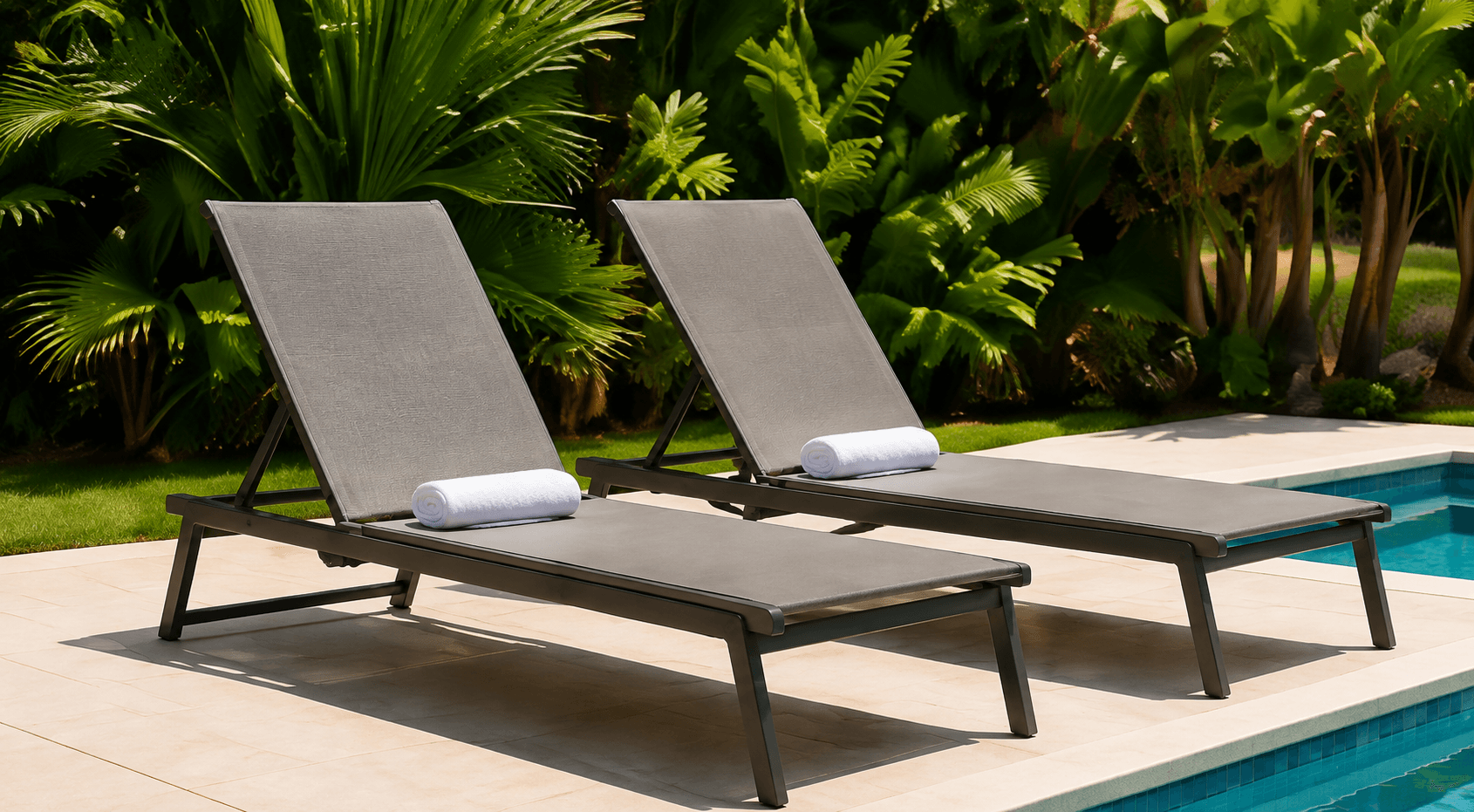
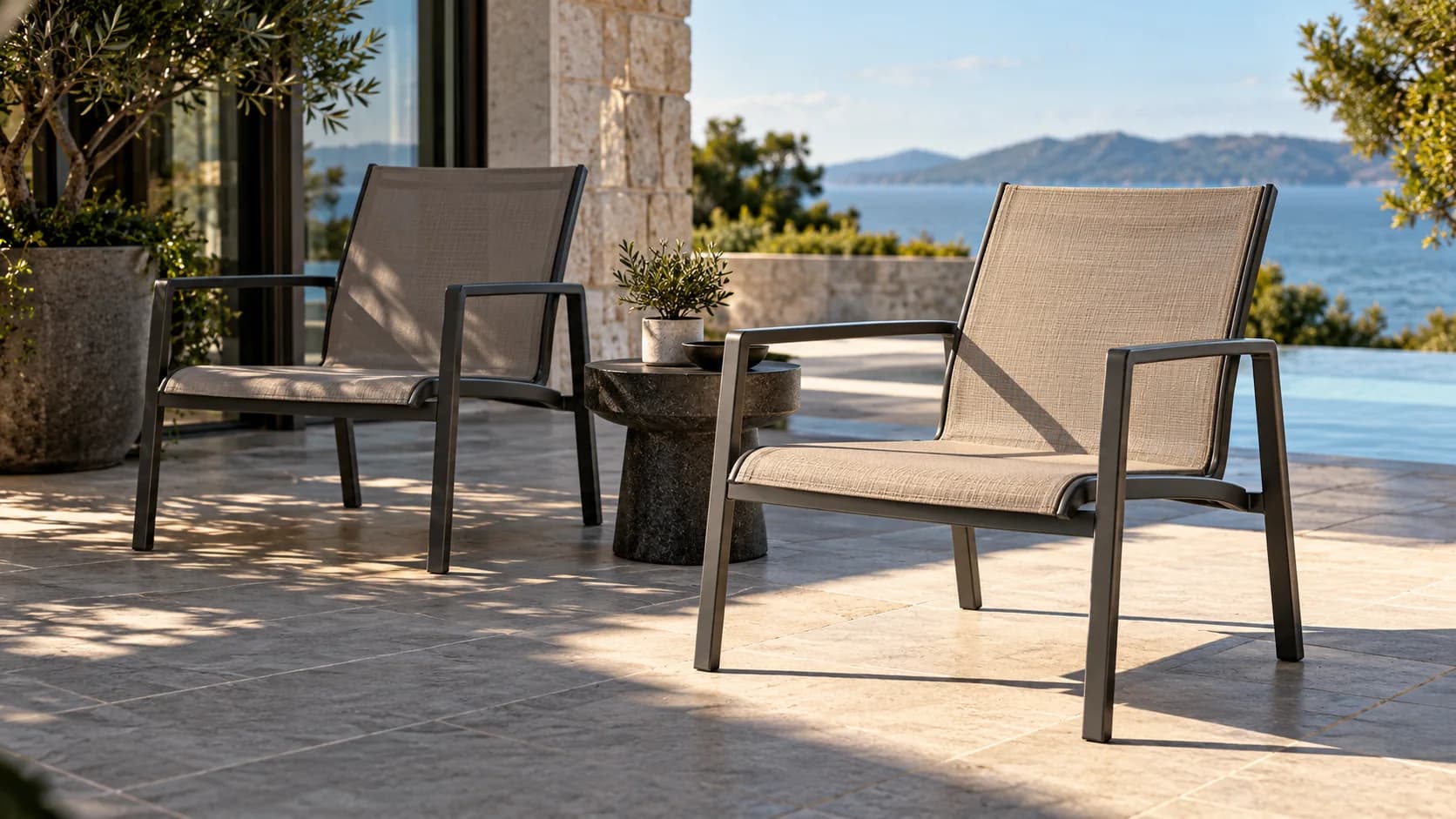
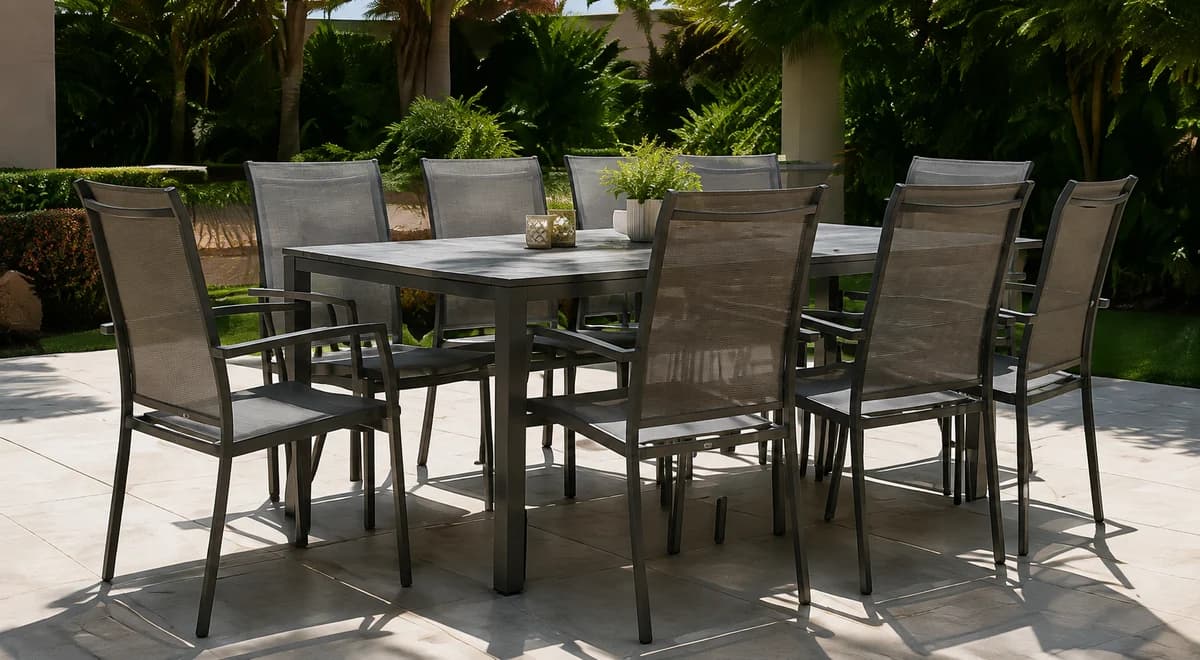
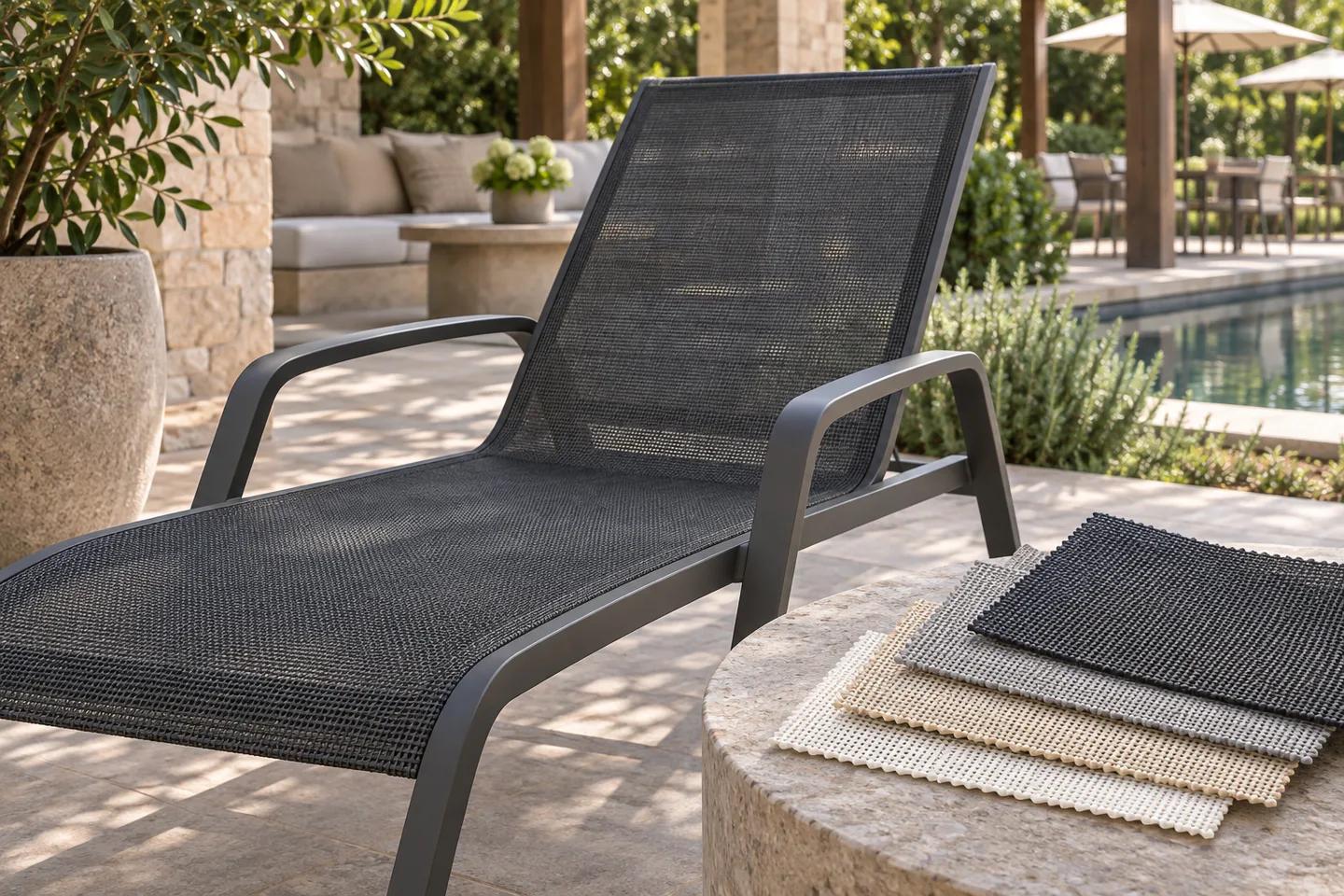
Woven mesh can be used in sling chairs, loungers, patio seating, and other furniture designs. The right material depends on the finished product and its construction. A sling seat is held under tension by a frame, so appearance alone cannot show whether a particular mesh is suitable for that design.
Phifer’s sling-fabric guidance describes its own sling fabrics as PVC-coated polyester yarns and highlights dimensional stability under tension as an important consideration for sling furniture. This is useful as a sourcing prompt, not as evidence about another supplier’s product. Buyers should evaluate the proposed fabric on the intended frame and request data for that exact construction. Phifer outdoor furniture sling-fabric guidance
Typical application questions include:
- Is the fabric intended for a seat or back panel that will be tensioned over a frame?
- How will the panel attach to the frame: sewn sleeve, rod pocket, spline, welded edge, or another method?
- Does the open area and surface feel suit the intended seat design?
- Will the furniture be used at a residence, pool, hotel, restaurant, or another commercial setting?
- What exposure, cleaning routine, and approval process should the sample represent?
The AOLEADER outdoor furniture application page can help buyers start from the finished product—such as a sling chair or sun lounger—before shortlisting a fabric reference.
Textilene, PVC mesh, and other outdoor fabrics: what should buyers compare?
Rather than assuming that names define performance, compare the details that affect your product and approval process.
| What to compare | What to ask the supplier |
|---|---|
| Product identity | What is the exact model or reference? Is the offered material genuine branded Textilene® or another category of woven mesh? |
| Construction | What fiber, coating, weave, yarn, and finish are used for this reference? Which details are confirmed in the product record? |
| Intended application | Is the sample proposed for a tensioned seat, a back panel, shade, screening, or another use? |
| Dimensions and conversion | What usable width and roll format are available? Is the fabric compatible with the buyer’s sewing, welding, or edge-finishing process? |
| Appearance | Which color and pattern reference will be sampled? How will the buyer approve color and weave before production? |
| Evidence | Which test reports or declarations are available for the exact product and color? What method, sample identity, and report scope do they cover? |
| Supply terms | What quantity, destination, packing, and delivery assumptions should be included in the quotation? |
Some suppliers use *PVC-coated* and *vinyl-coated* in product descriptions. Ask for the precise construction instead of treating the wording as proof that two materials are identical. Similarly, terms such as “outdoor,” “UV-resistant,” “weather-resistant,” or “slingable” should be supported by product-specific documentation or an agreed sample evaluation before they become purchase requirements.
How to prepare a Textilene fabric sample request
A useful inquiry gives the supplier enough context to identify a candidate material and explain what still needs confirmation. Include:
- The finished product: for example, a dining chair, beach chair, chaise lounge, or poolside lounger.
- A drawing, frame sample, or reference photo: include dimensions and the attachment or edge-conversion method if known.
- The intended use and market: identify residential or commercial use, destination country, and expected exposure.
- The visual direction: list the preferred color, pattern, openness, and any reference swatch or color standard.
- The order context: estimated sample and production quantities, target timing, packing needs, and delivery destination.
- Required evidence: name any test methods, compliance documents, or acceptance criteria your team requires. Ask whether the information applies to the exact sample under consideration.
For a tensioned sling application, ask to review the material on the intended or representative frame before approving a production specification. If you need to compare reports, use the same material reference, color, test method, and evaluation criteria. Our guide to outdoor sling fabric UV testing explains why a headline exposure duration by itself is not a complete comparison.
Common sourcing mistakes to avoid
Treating a search term as a complete specification
“Textilene,” “PVC mesh,” and “outdoor mesh” can help describe the initial search, but they do not identify all of the details needed for a quotation or approval. Use an exact product reference and written brief.
Assuming a material works for every mesh application
A fabric suitable for one furniture design should not be assumed to suit a different seat, a shade system, or a screen. Confirm application, construction, and system fit separately.
Accepting a general performance claim without its scope
Ask which product and color were tested, which method was used, what result was measured, and whether the report covers the proposed order. Do not extend a test result from one product to a whole catalog unless the documentation supports that scope.
Approving from a photograph alone
A photo can help shortlist appearance, but it cannot confirm hand feel, dimensional behavior, conversion, or a color match. Review a physical sample and define the approval reference before production.
Work from the application to the material reference
Textilene fabric can be a useful starting search for outdoor furniture mesh, but a B2B decision should end with a clearly identified material, an application-specific sample, and written confirmation of the details that matter to the product. Start with the furniture design, confirm the supplier’s terminology and product reference, and agree on the evidence and approval steps before placing an order.
Explore AOLEADER’s Textilene Fabric references and Outdoor Furniture Fabric range, or contact the team with your application, dimensions, target market, color direction, and expected quantity. Product-specific specifications, sample availability, and documentation should be confirmed for each request.
FAQ
Is Textilene the same as PVC-coated polyester mesh?
Textilene® is a trademarked name used for branded products, and the brand describes its technical fabric as PVC-coated polyester. Other suppliers may use similar terms for related mesh categories. Ask whether a quotation is for genuine branded goods or another material, then confirm the exact construction and product reference.
Is Textilene fabric suitable for sling chairs?
Some woven mesh fabrics are designed for sling seating, but suitability depends on the exact fabric and chair system. Confirm the intended application, frame, attachment method, sample evaluation, and product-specific evidence with the supplier.
What is the difference between Textilene mesh and shade-screen fabric?
Both may be open woven materials, but a sling seat and a shade screen have different jobs and system requirements. Do not assume one is suitable for the other based on appearance. Ask for a product reference proposed for your specific application.
What should I include in a Textilene fabric RFQ?
Include the finished product, drawing or frame details, required width, preferred color and pattern, destination market, estimated quantity, conversion method, and any required tests or documents. Ask the supplier to identify the exact sample and quotation reference.
Can I compare suppliers by GSM alone?
No. Weight is only one data point and does not identify the full construction or confirm application fit. Compare matched product references, samples, dimensions, conversion requirements, and product-specific evidence.