Direct answer
There is no single GSM that is best for every outdoor furniture mesh application. The right target depends on the chair design, the way the fabric is attached and tensioned, the required appearance and feel, the conversion process, and the buyer’s performance criteria. GSM is useful for identifying and comparing fabric mass per unit area, but it does not by itself establish whether a mesh is suitable for a particular sling chair.
Start with the finished furniture and an approved sample. Ask each supplier to state the proposed construction, measured GSM and test method, then assess the material on the intended or representative frame. Agree on any strength, dimensional stability, weathering, color or finished-chair checks separately. This gives your team a defensible specification without treating weight as a shortcut for performance.
What does GSM mean for outdoor furniture mesh?
GSM means grams per square metre (g/m²), a measure of a fabric’s mass per unit area. It can help a buyer distinguish material references and check whether production samples are consistent with an agreed target. For repeatable comparison, the sample size, conditioning, test method and reporting basis matter.
ASTM D3776/D3776M covers methods for determining fabric mass per unit area. Its options address different sample forms, from a full piece or full-width sample to a small swatch. When requesting a result, name the method or option your team expects and confirm the report identifies the tested specimen. A small swatch result describes that specimen; it should not automatically be treated as proof that every roll or lot meets the same value. ASTM D3776/D3776M
For an RFQ, record GSM as one line in the material specification—not as the whole specification. Where the supplier proposes a target, ask them to identify the exact product reference and explain how the figure was measured. If you need a tolerance, define it with the supplier and your quality team based on the product and production-control requirements.
Why a higher GSM does not automatically mean a better sling fabric
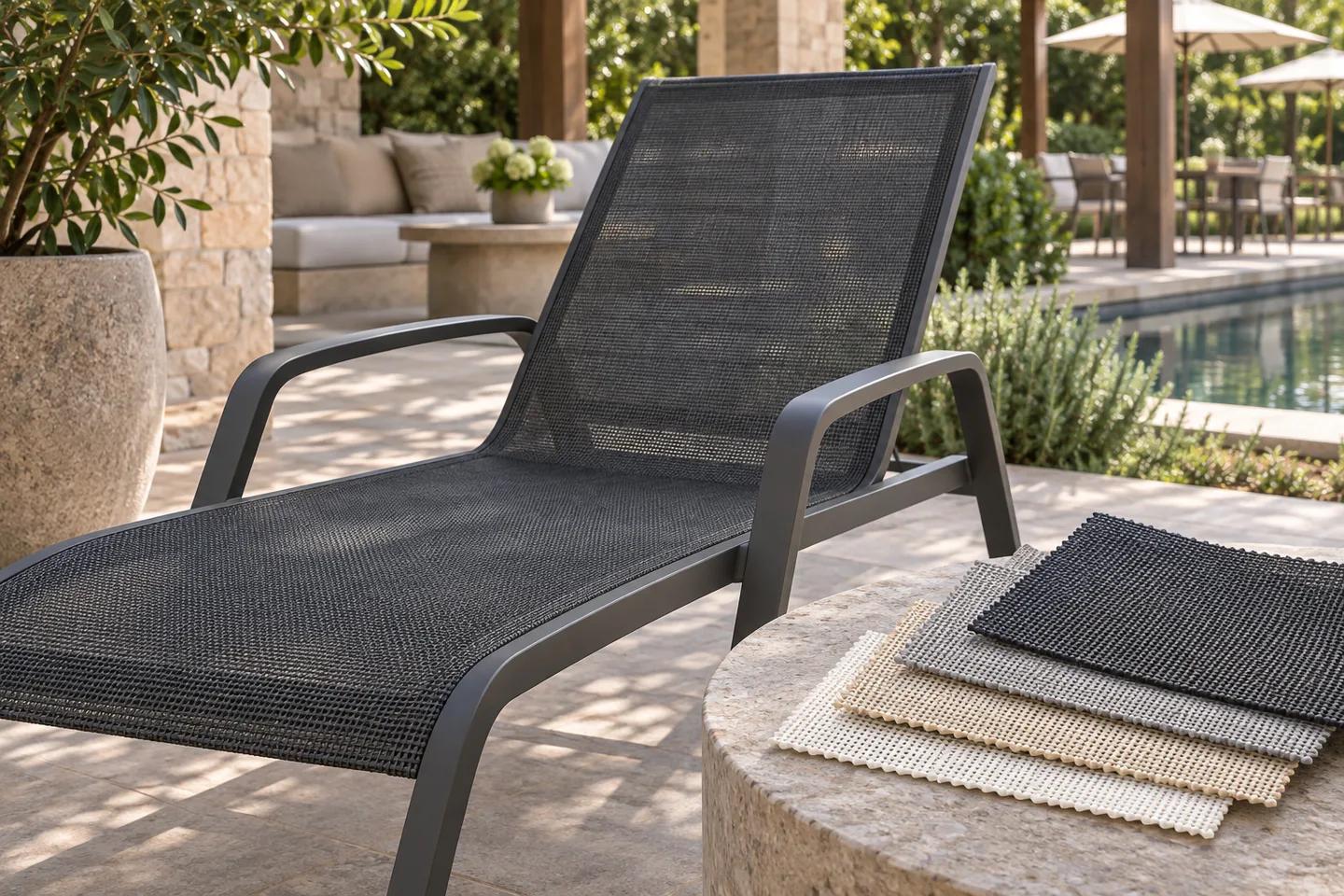
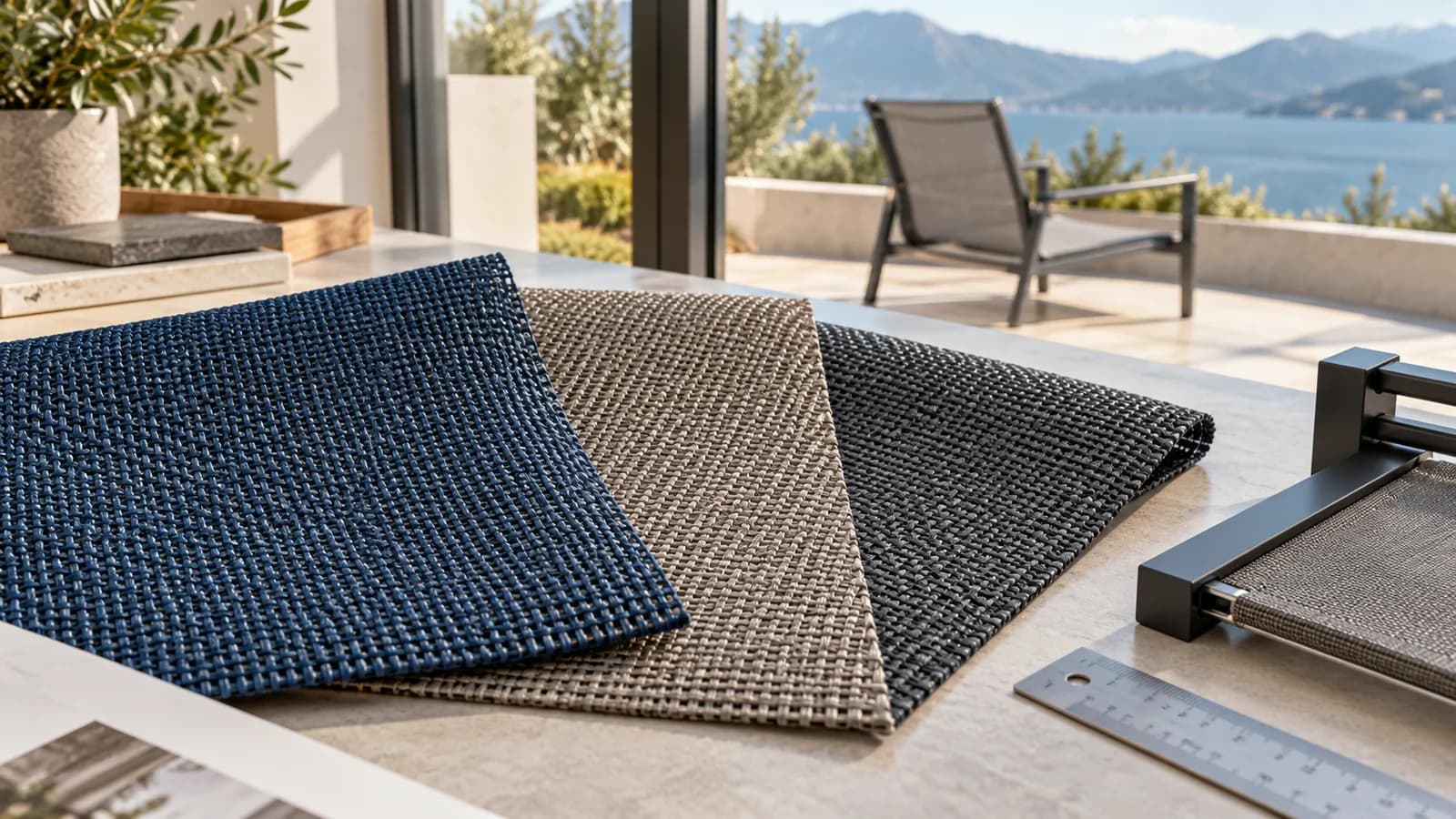
Two meshes with the same GSM can differ in yarn, coating, weave, open area, finish, width and construction. Those differences can affect how the material looks, feels, converts and behaves in the buyer’s chair. Conversely, a heavier fabric is not automatically stronger, more stable, more comfortable or longer-lasting in every design.
Keep these questions separate during evaluation:
| Buyer question | Evidence or check to request |
|---|---|
| Is the material identity consistent? | Exact model or reference, construction description, sample identification and production-lot controls. |
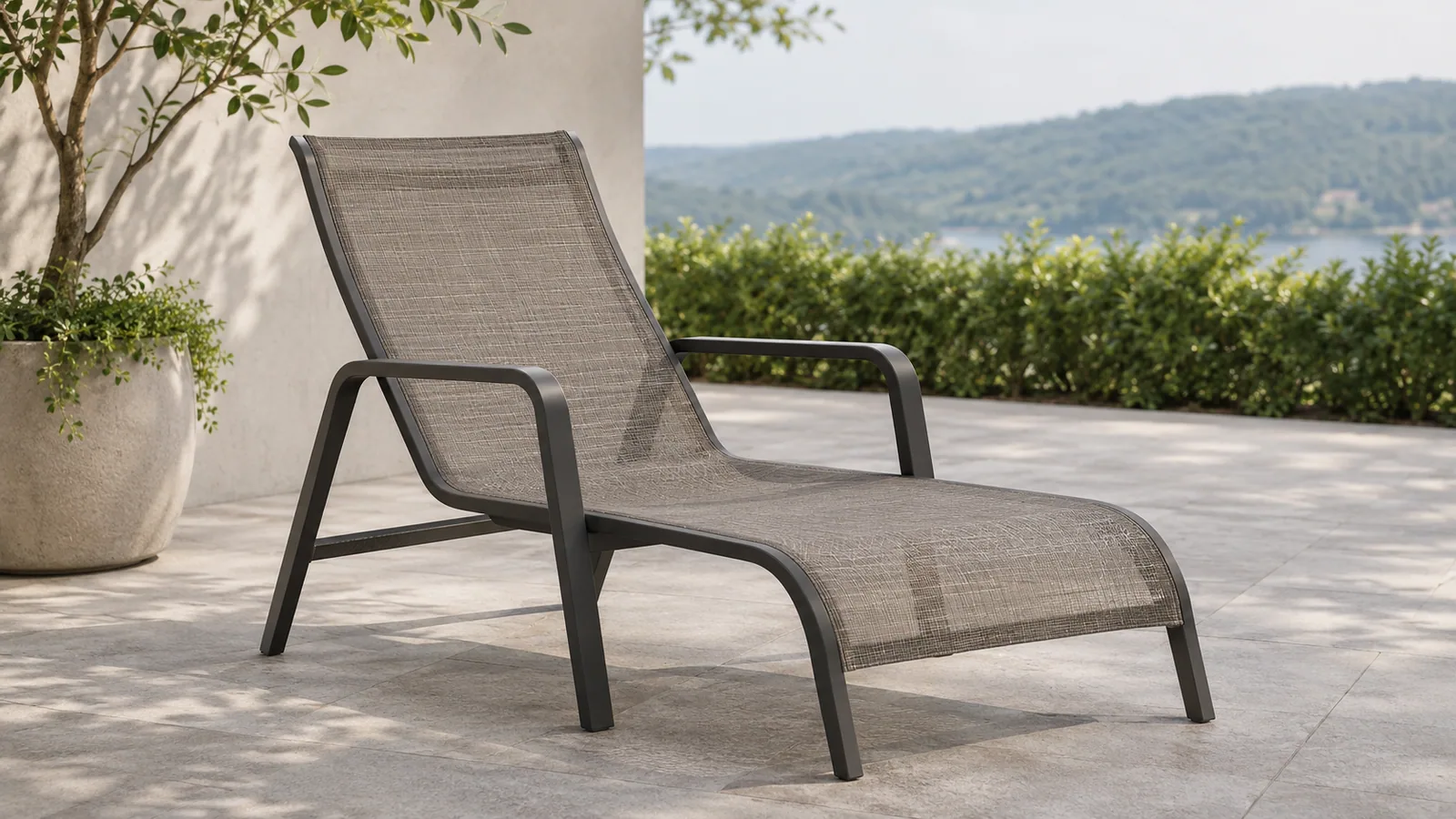
| Does the fabric suit the chair geometry? | A sample installed on the intended frame or a representative prototype; check fit, attachment, appearance and assembly. |
| Does it meet the required mechanical criteria? | State the relevant test property, method, specimen direction, conditioning and acceptance limit. Select methods with your lab or technical team for the actual mesh construction. |
| Will appearance remain acceptable? | Define color and visual approval, and separately specify any lightfastness or weathering evaluation required for the destination and use. |
| Can it be converted consistently? | Trial the intended sewing, welding, pocket, spline or other edge treatment; record the approved process and dimensions. |
Breaking strength, tear resistance, elongation, dimensional change and light exposure are distinct properties. A GSM result does not substitute for tests of those properties. If your chair design relies on a tensioned panel, include the frame and attachment in the evaluation rather than approving a fabric by weight alone.
How to choose a GSM target for your chair program
Use a step-by-step qualification process instead of choosing a number from a generic chart:
- Define the application. Identify the chair or lounger, seat and back-panel layout, frame dimensions, attachment method, intended setting and expected duty.
- Set the design requirements. Describe the desired openness, hand feel, support, visual appearance and conversion method. Provide drawings, a reference sample or a representative frame when available.
- Request candidate constructions. Ask suppliers to state the exact reference, construction, nominal GSM, measurement method, usable width, color options and available product-specific evidence. Mark any item that still needs confirmation.
- Compare like with like. Have candidate samples measured using the same agreed method and conditioning basis. Record sample IDs and report details; do not compare one supplier’s full-width conditioned result with another’s undocumented swatch result as though they were equivalent.
- Build and review a prototype. Install the fabric using the intended conversion process. Review fit, tension, sewing or edge finish, appearance and assembly with the furniture team.
- Set the approved specification. Once a candidate passes the buyer’s review, document the model, color, GSM target and tolerance if applicable, test requirements, approved sample, change-control process and lot acceptance checks.
This process can reveal that a candidate with a convenient GSM is a poor match for the frame—or that two samples with similar GSM behave differently during conversion. The specification should reflect the approved material and use case, not an assumed universal “best” weight.
What should a mesh-fabric GSM comparison include?
Use a comparison sheet like this for supplier samples:
| Field | Record for every sample |
|---|---|
| Supplier and material reference | Company, model, sample ID and date received. |
| Construction details | Confirmed yarn, coating, weave and finish; label unknown details as pending. |
| GSM result | Measured value, unit, method/option, conditioning basis, sample dimensions and lab or measurement source. |
| Other dimensions | Usable width, roll format, color and any agreed tolerance. |
| Conversion trial | Frame or pattern reference, attachment method, process settings if relevant, fit and finish observations. |
| Performance evidence | Test property, standard/method, specimen identity and direction, conditioning, result and acceptance criterion. |
| Decision | Approved, rejected or awaiting more information—with reviewer and date. |
If laboratory reports come from different providers, compare only when the method, specimen, conditioning and reporting basis are sufficiently aligned. If they are not, ask the lab or technical team whether a new comparison test is needed. A headline figure without its method and specimen identity is weak purchasing evidence.
RFQ wording buyers can adapt
Add the required test properties and acceptance limits only after your product, engineering and quality teams determine what the chair program needs. If your application is not yet fully defined, share the intended furniture type, dimensions, market and visual requirements so candidate constructions can be discussed before a final GSM target is fixed.
Frequently asked questions
Is higher GSM always stronger?
No. GSM measures mass per unit area. Strength depends on construction and the test property being measured, so request the relevant test evidence for the exact material and define how it will be evaluated.
Can I compare GSM figures from different suppliers?
Yes, if the results use a sufficiently consistent method, specimen basis and conditioning. Record those details with each value; otherwise, ask for comparable measurements before making a purchasing decision.
Should a GSM target be included in a purchase specification?
It can be included when it helps identify and control the approved construction. Pair it with the material reference, sample approval, tolerances and the other performance and conversion requirements relevant to the finished chair.
Does AOLEADER publish one recommended GSM for all outdoor sling mesh?
No single public GSM target is specified for all applications. Share your chair design and requirements so the candidate construction and its evidence can be reviewed for that use.
Discuss your sling-fabric specification
AOLEADER’s outdoor furniture fabric range and Textilene fabric references can be reviewed alongside your chair design. For application context, see our outdoor furniture page, quality information and guide to outdoor sling fabric UV testing.
Discuss Your Sling Fabric Specification — send the application, frame or drawing, preferred construction and color direction, destination market, required evidence and estimated quantity. If some requirements are still open, identify them as questions for the supplier rather than treating them as fixed specifications. Contact AOLEADER.
Sources
- ASTM D3776/D3776M — Mass Per Unit Area (Weight) of Fabric
- AOLEADER catalog and linked product/application/quality pages, reviewed for currently published information. No unlisted GSM range or product performance is implied by this draft.