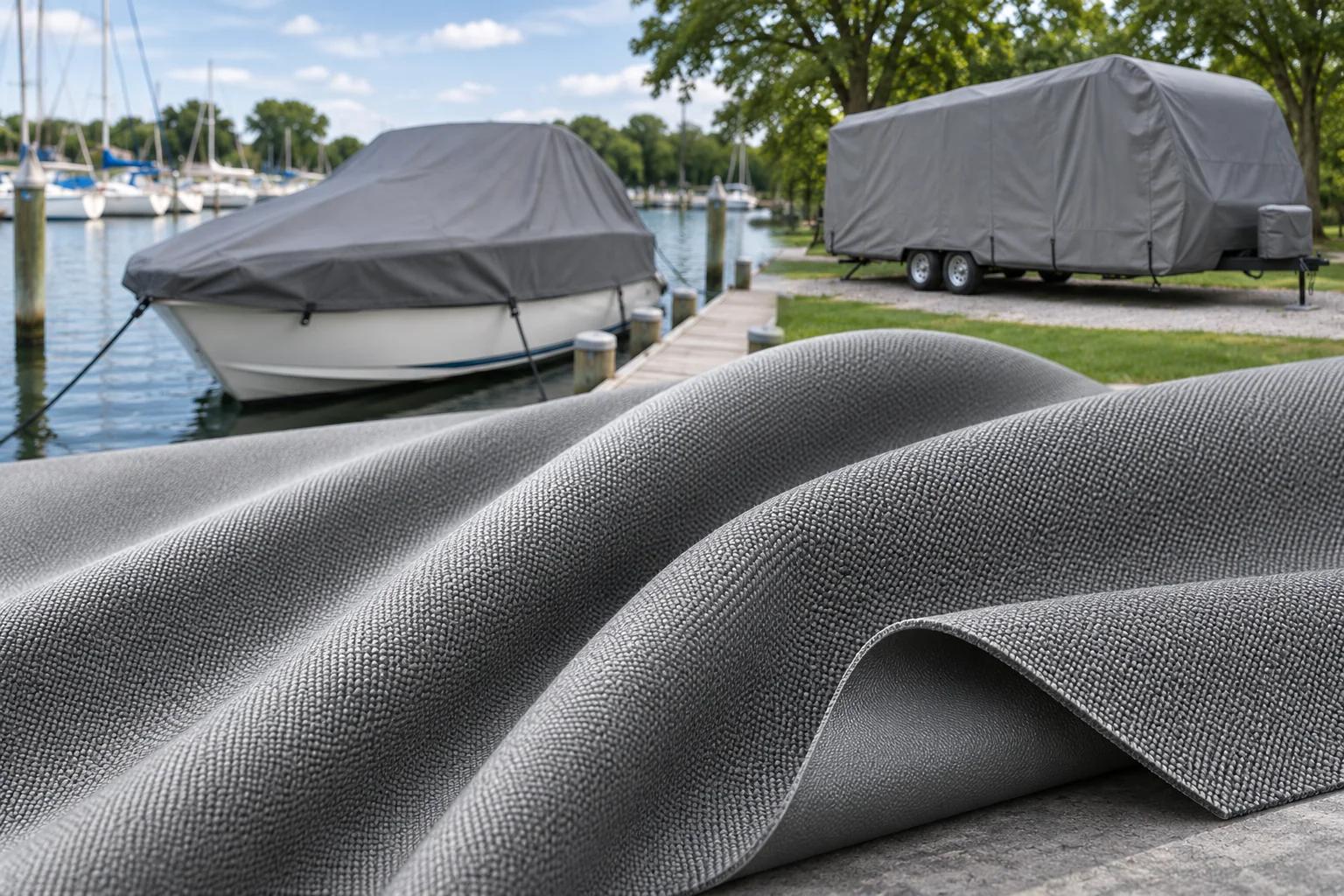
Direct answer
“600D waterproof canvas” is not a complete fabric specification. 600D describes yarn linear density; it does not by itself establish finished-fabric weight, coating, water resistance, UV performance, or service life. For boat, RV, awning, and equipment-cover projects, buyers should confirm the base yarn, weave, coating or laminate, finished weight, test method, application fit, and sample performance for the exact product being quoted.
When a cover project calls for 600D waterproof canvas, the fabric name can make a useful starting point for supplier discussions. It does not answer the questions that determine whether a material fits a boat cover, RV cover, patio awning, or outdoor equipment cover.
For B2B buyers, the priority is to connect the material to the finished product. The fabric has to match the exposure, pattern, attachment system, seam construction, cleaning routine, and approval requirements. A product photo or a “600D” label cannot confirm those details.
This guide is for cover makers, marine suppliers, RV brands, awning fabricators, importers, and distributors comparing coated outdoor fabrics. It offers a practical RFQ checklist without assuming that all 600D fabrics share the same construction or performance.
What does 600D mean in a fabric description?
Denier (D) is a measure of yarn linear density. A 600D yarn has a mass of 600 grams per 9,000 meters of yarn. The number is about the yarn, not a complete description of the finished fabric. (Office québécois de la langue française: denier; ASTM D4849 terminology summary)
Two fabrics described as 600D may still differ in base material, yarn construction, weave, coating, weight, thickness, color, and finishing. The label also does not tell you whether a fabric is Oxford woven, ripstop, plain woven, coated on one side, or laminated. Ask the supplier to identify the exact construction and product reference.
That distinction matters because a buyer is selecting a finished cover material, not just a yarn size. Request the specification sheet for the material actually being sampled, then compare like with like.
What should “waterproof” mean in an RFQ?
Water resistance should be linked to a test method and result. ISO 811:2018 specifies a hydrostatic-pressure method for measuring resistance to water penetration through fabric. AATCC TM127 also measures water penetration under hydrostatic pressure and notes that results can differ from other rain or water-spray tests. (ISO 811:2018; AATCC TM127)
When comparing supplier claims, ask:
- Which side of the fabric was tested?
- Which test method and test conditions were used?
- What result and units were reported?
- Does the report identify the same material reference and color being quoted?
- Is the claim for the fabric alone, or for a finished cover with seams and closures?
A fabric test does not automatically establish the water protection of a finished cover. Seams, stitch holes, zippers, hems, vents, tie-down points, fit, and water pooling can all affect the completed product. If the cover will face heavy rain, spray, or prolonged outdoor storage, define the finished-product evaluation with the fabricator before production approval.
Choose the material around the application
Boat covers
Describe where the boat is stored and how the cover is used: marina berth, trailer transport, seasonal storage, or another setup. Ask the cover maker to review abrasion points, tie-down locations, hardware contact, ventilation, fit, and seam exposure. A swatch may help compare color and hand, but the cover pattern and attachment details still need their own review.
RV covers
Clarify whether the material is intended for a travel cover, a parked vehicle, or an accessory cover. The supplier and fabricator need to know the dimensions, contact points, movement or wind exposure, storage period, and how the cover will be secured. Ask how the finished construction will manage abrasion against the vehicle and whether the proposed fabric is suitable for the intended conversion method.
Awnings and shade covers
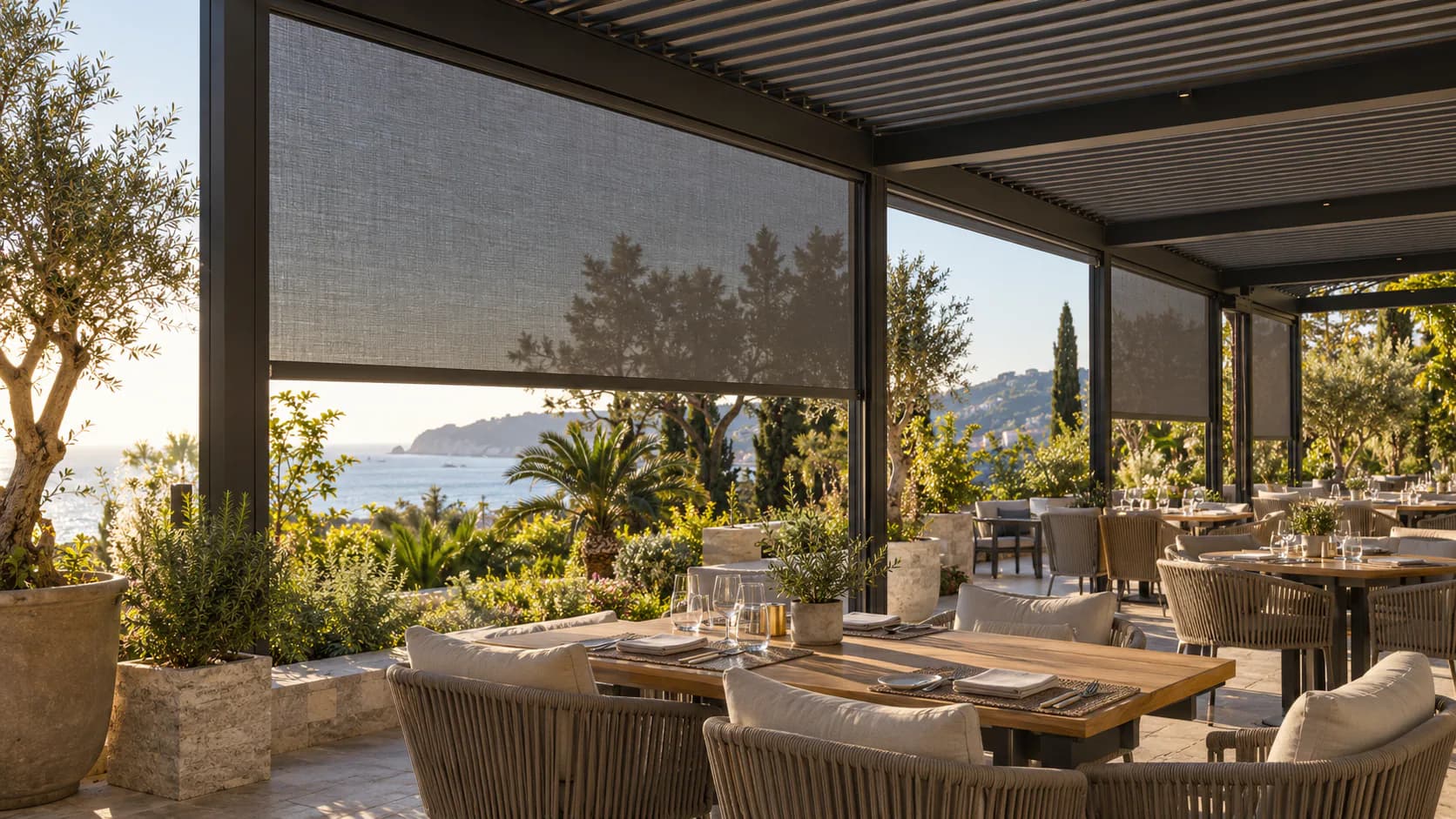
An awning is a tensioned system exposed to sun, wind, rain, and drainage conditions. Identify the support structure, slope, panel dimensions, cleaning access, and operating environment. Ask for the evidence relevant to the intended use; do not assume a fabric used for a storage cover will also suit an awning system.
Outdoor equipment and furniture covers
List the object’s shape, sharp corners, heat exposure, contact surfaces, expected movement, and storage environment. Specify whether the cover needs openings, ventilation, access panels, or attachment points. A material can only be evaluated fairly when buyers explain how the finished cover will be made and used.
Is ripstop construction important?
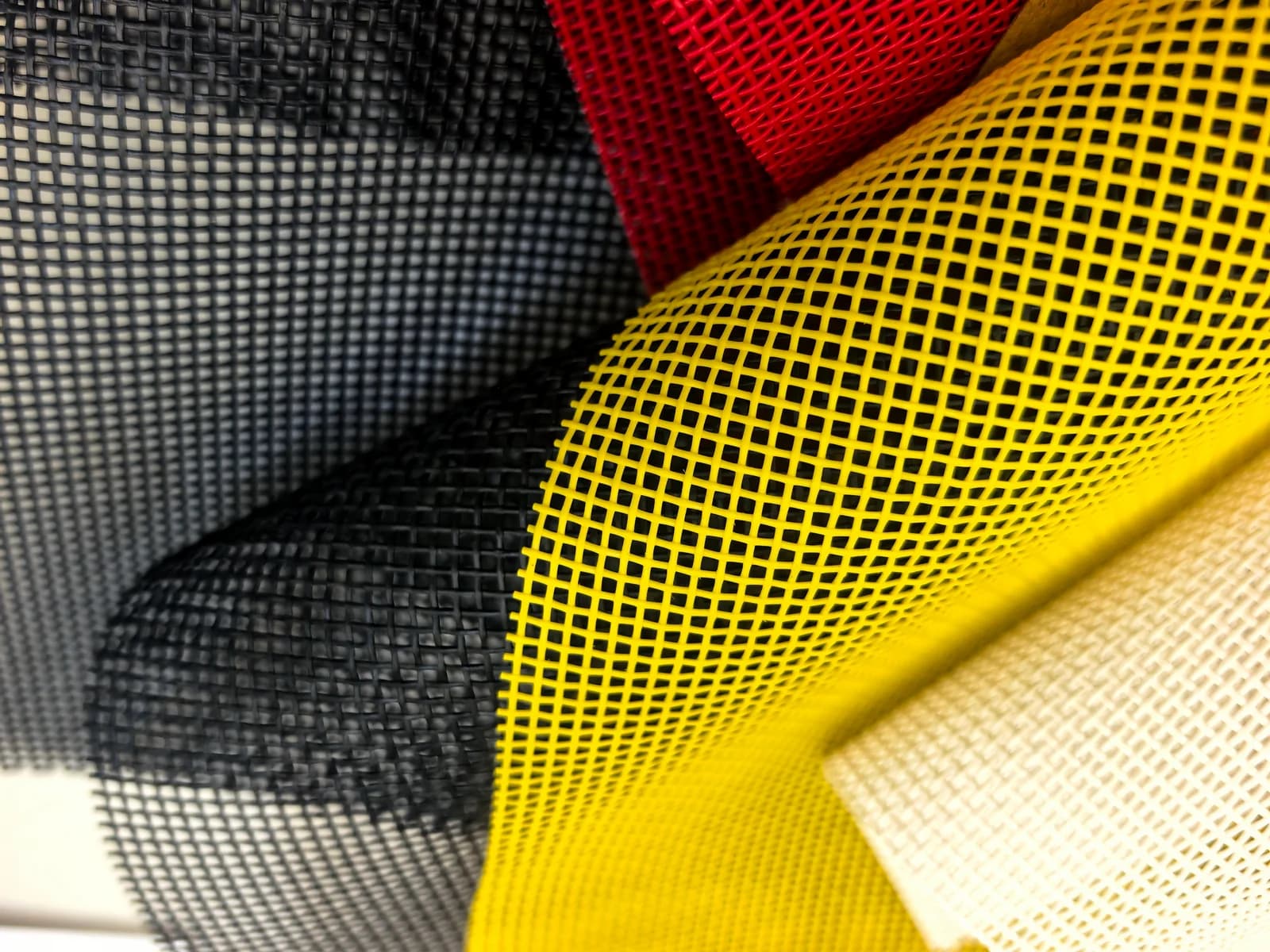
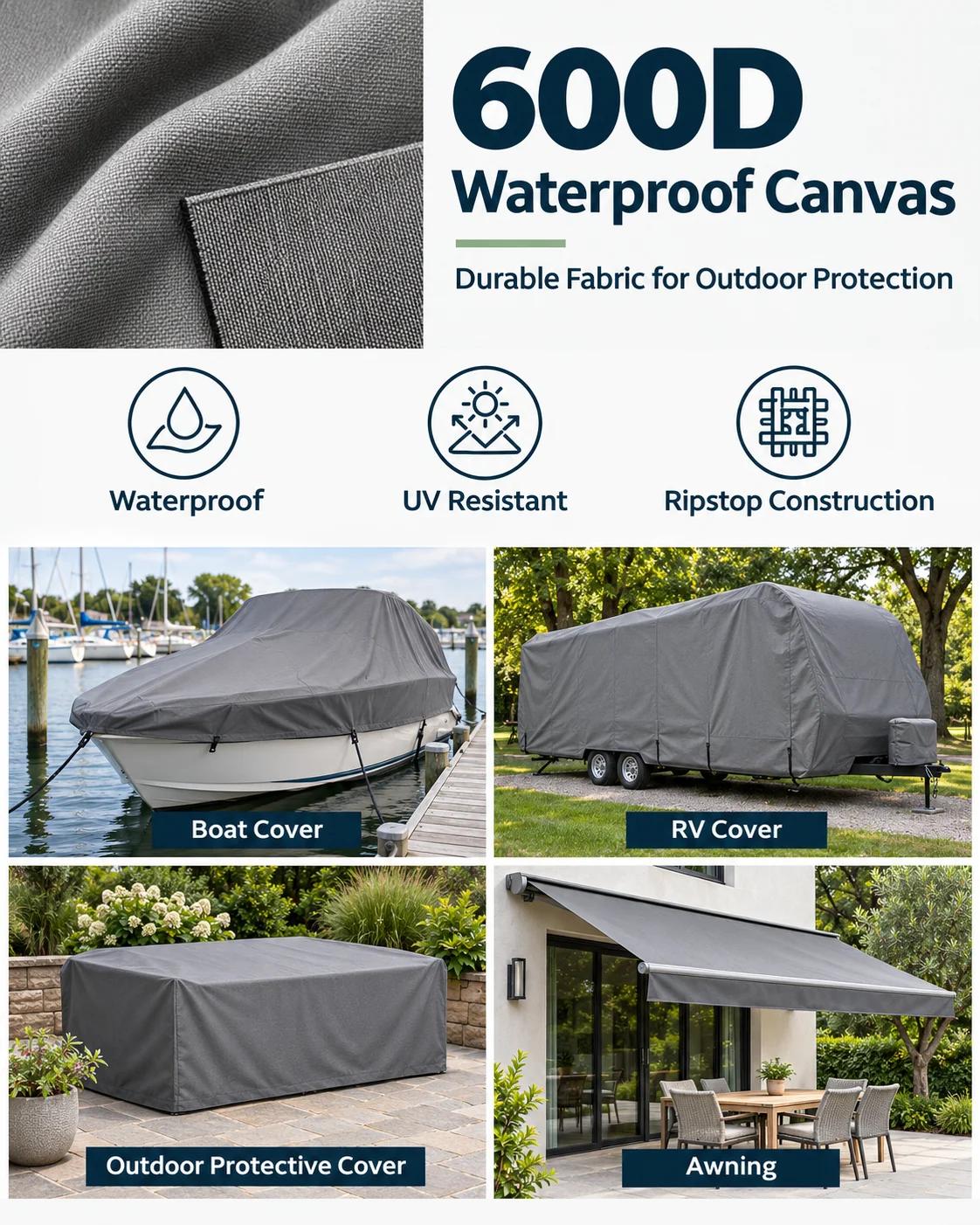
The image describes the fabric as having “Ripstop Construction.” If ripstop is a required feature, ask the supplier to confirm the actual weave or reinforcement pattern and show it on the sample or technical sheet. Do not infer ripstop construction from a close-up photograph or from a 600D label.
Also state what matters to the project: tear resistance, abrasion, dimensional stability, or conversion performance. Request the relevant test information for the exact material and agree how the production sample will be checked. “Ripstop” alone is not a substitute for a measurable requirement.
A practical 600D cover-fabric RFQ checklist
Send the same brief to each supplier so quotations and samples can be compared consistently:
- Finished product: boat cover, RV cover, awning, equipment cover, or another application.
- Drawing and dimensions: include panel size, shape, seam placement, closures, vents, tie-downs, and any reference pattern.
- Exposure: describe location, season, storage period, sunlight, rain or spray, wind, and cleaning conditions.
- Material definition: state whether 600D is a requirement or an initial reference; request base fiber, yarn, weave, coating or laminate, finished weight, thickness, width, and roll details.
- Performance evidence: list required water-resistance, UV, tear, abrasion, or other test methods and acceptance criteria. Ask for reports tied to the proposed product.
- Conversion and approval: identify sewing, welding, binding, or other processes; define the sample, color, and finished-cover approval steps.
- Order details: share estimated quantity, destination country, packaging needs, target timing, and any required product documents.
Ask the supplier to mark every specification as confirmed, available on request, or still to be checked. This makes the gap between a marketing description and a purchase-ready specification visible before a bulk order.
Take the next step from the material brief
For cover projects, “600D waterproof canvas” can start the conversation, but the supplier should quote an identified construction supported by evidence that matches the intended application. Confirm the fabric and the finished-cover requirements together, then approve a representative sample before bulk production.
AOLEADER’s public catalog includes Truck Cover Mesh and Vinyl-Coated Polyester Mesh references for projects considering those material categories. They are not automatically equivalent to a solid 600D waterproof canvas. For a material discussion, send the application, drawing, target market, quantity, and required tests so the team can confirm whether a suitable reference is available.
FAQ
Does 600D mean a fabric is waterproof?
No. Denier describes yarn linear density. Water resistance depends on the complete fabric construction and finish and should be verified with a named test method and product-specific result.
Is 600D waterproof canvas the same as 600D Oxford fabric?
Not necessarily. “600D” identifies yarn linear density, while “Oxford” refers to a weave description. “Waterproof canvas” may be used as a product label, but buyers should confirm the actual weave, base material, coating, and test evidence.
Can one 600D fabric work for boat covers, RV covers, and awnings?
Do not assume so from the denier alone. The finished product, exposure, support system, abrasion, fit, seams, and required evidence differ by application. Review the material against the intended system and use.
What water-resistance test should I request?
Ask which method your project requires. ISO 811 and AATCC TM127 are hydrostatic-pressure methods for fabric water resistance; their results should not be treated as interchangeable with every spray or rain test. Confirm the method, conditions, units, and sample identity with your buyer or product team.
How do I verify ripstop construction?
Request the construction details and examine a representative sample. If tear performance is a requirement, specify the test method and acceptance criteria separately; the word “ripstop” alone does not give a test result.